Airport hub guide
Hanoi Noi Bai HAN: the complete layover guide
Two terminals split cleanly by role, around ten lounges, sleep pods on both sides of the airport, and a city bus that costs less than a coffee. Here is how to handle a layover at Noi Bai without the guesswork.
Layover verdict Good at almost any length. Both terminals stay open around the clock, the lounge bench is deep for Southeast Asia, sleep pods rent by the hour, and the expanded Terminal 2 that opened in December 2025 has taken the squeeze out of the international peaks.
Best lounge play Priority Pass opens the SH Premium Lounge in each terminal, the rebranded Song Hong rooms. The Terminal 2 lounge sits on the fourth floor near gate 28, serves pho made to order, and stays open until about 2 am for the late departure bank.
The one thing to know There is no airside link between the terminals. If you land international in Terminal 2 and depart domestic from Terminal 1, you clear immigration and customs, ride the free shuttle, and check in again. Treat 2 hours as the floor on separate tickets.
Last reviewed 7 June 2026
Quick facts
Noi Bai at a glance
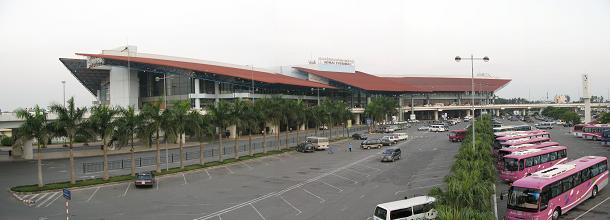
| Terminals | 2. Terminal 1 domestic, Terminal 2 international; the expanded T2 opened 19 December 2025 |
| Airside transit between terminals | None. The transfer is landside on a free electric shuttle, about 10 minutes, running from early morning until around 1 am |
| Free wifi | Yes, free in both terminals |
| Sleep friendliness | Good. Both terminals open 24 hours; VATC sleep pods rent by the hour in T1 and T2 |
| Lounge count | About 10 across both terminals; 7 in T1 and 3 in T2 before the expansion, new T2 lounges to be confirmed |
| Nearest in terminal hotel | None. VATC sleep pods inside both terminals are the closest flat bed; full hotels sit a short drive away with shuttles |
Orientation
How Noi Bai is laid out
Noi Bai keeps the logic simple. Terminal 1 handles every domestic flight, Terminal 2 handles every international one, and a free electric shuttle covers the short hop between the two buildings. Learn that split and the rest of the airport falls into place.
Terminal 2 is the building most international travelers will see, and it changed substantially in late 2025. An expansion that broke ground in May 2024 opened on 19 December 2025, pushing the floor area past 200,000 square meters, lifting boarding gates from 17 to 30 and jet bridges from 14 to 27, and raising annual capacity from 10 million passengers to 15 million with room to stretch toward 18. The project also brought self service check in kiosks, self bag drop, automated immigration lanes and biometric security screening, a first for a Vietnamese international airport at this scale. Combined with Terminal 1, Noi Bai can now move about 30 million passengers a year.
Between the terminals, VinBus runs a free electric shuttle from early morning until around 1 am, departing every 10 to 15 minutes for a ride of 5 to 10 minutes. The transfer happens entirely landside. That matters for connections: arriving international and departing domestic means immigration, baggage claim, customs, the shuttle, and a fresh check in at Terminal 1. Domestic to domestic inside T1 is relaxed at 60 minutes on one ticket. International to international inside T2 usually works at 90 minutes because you can stay in the transit area. For the cross terminal move, give yourself 2 hours on a single ticket and 3 on separate ones, more if you land during the morning arrival wave when immigration queues can pass an hour.
The city sits about 27 km south. There is no rail link, so the choice is bus or road. Bus 86 runs from both terminals to the Old Quarter and Hanoi station for around 45,000 dong, under 2 US dollars, from early morning until about 10 pm; budget 50 to 70 minutes depending on traffic. A Grab car costs roughly 250,000 to 390,000 dong to the center, a metered taxi 300,000 to 400,000 plus a small toll, and either covers the run in 30 to 45 minutes outside rush hour. Use the official taxi ranks or the marked app pickup zones and ignore anyone offering a ride inside the terminal.
Inside the terminal
What the two terminals give you
Landside: pods, massage and the basics
Both terminals carry the essentials landside: cafes, Vietnamese restaurants, currency counters open from roughly 6:30 am to midnight, ATMs, and SIM kiosks from Viettel, Vinaphone and MobiFone selling tourist data packs in arrivals. VATC operates sleep pods on the third floor of Terminal 1 before security, with single and twin cabins renting by the hour or by the day at roughly 35 to 60 US dollars; book through an online travel agency because VATC takes no direct bookings. Left luggage runs around the clock on the second floor of Terminal 2 for about 90,000 to 100,000 dong per day, and T1 passengers have to use it too. Sky Massage outlets operate in both buildings if you would rather spend a layover horizontal in a different way.
Terminal 1 airside: the domestic lounge row
Domestic T1 holds the bigger lounge count, around seven rooms. The SH Premium Lounge on level 3 near gate 5 is the Priority Pass door, opening from about 4:30 am for the first wave. The ASG Sky Lounge, opened in May 2025, is the budget pick with a walk up rate near 15 US dollars and, unusually, a mini cinema and spa services. Vietnam Airlines runs a domestic Lotus Lounge for its premium passengers, Bamboo Airways has its First Lounge, and three bank lounges from Vietcombank, SHB and VPBank serve their own premium cardholders only. If you hold none of the above, walk up entry at SH Premium or ASG is cheap enough to be worth it on any layover past 2 hours.
Terminal 2 airside: the international fourth floor
The international lounges cluster on the fourth floor above the gates. The SH Premium Lounge near gate 28, formerly the Song Hong Business Lounge, is the Priority Pass and walk up option, open from early morning until about 2 am, with a staffed pho station, sushi, showers and massage services. Behind it near gate 29 sits the Vietnam Airlines Lotus Lounge, open 4 am to 11:50 pm, for Vietnam Airlines business class and SkyTeam Elite Plus; anyone on a Vietnam Airlines group boarding pass can also buy a voucher from the airline for about 638,000 dong. Between gates 30 and 31, the ACV Business Lounge, also signed NIA Business Lounge, is the biggest room at around 1,500 square meters with sleep pods and showers inside, sells entry at the door for about 35 US dollars, takes DragonPass, and hosts business class passengers from Cathay Pacific, Qatar Airways, Emirates and most Star Alliance carriers. Whether the December 2025 expansion added new lounges along the new gates is to be confirmed; the established three all sit in the existing pier.
The overnight reality
Noi Bai stays open 24 hours landside and airside in both terminals, and overnight the security staff may ask to see a boarding pass, so keep yours handy. The honest sleep map is short. The VATC pods are the only flat private beds, on the third floor of T1 and the second floor of T2; whether the T2 pods sit before or after security is reported both ways, so confirm when you book. Airside in T2, a rest zone on the third floor near gate 36 has seating you can stretch out on, and padded chairs scatter through the gate areas. Food thins out sharply after the late evening departures, so eat before midnight. The SH Premium Lounge holding the door open until about 2 am is the best bridge into the small hours if you hold access.
Your layover, planned
The HAN guides
Noi Bai layover guide, hour by hour
What 3, 5 and 8 hours buy you at HAN, the cross terminal shuttle, the transit visa rule and the bus to the Old Quarter.
HAN lounges and how to get in
Every lounge across both terminals, SH Premium on Priority Pass, the 24 hour ACV Business Lounge, with hours and prices.
Sleeping at Noi Bai
The VATC sleep pods in both terminals, the gate 36 rest zone and the 24 hour reality.
Check lounge access for HAN
Around ten lounges operate across the two terminals and several sell entry to any traveler regardless of airline or cabin. Compare current access options, prices and hours before you fly.
Check lounge accessSome links may earn us a commission at no cost to you.
FAQ
Noi Bai layover questions
Can I sleep overnight at Noi Bai airport?
Yes. Both terminals stay open 24 hours landside and airside, though staff may ask to see a boarding pass overnight. For real sleep, VATC sleep pods rent private cabins by the hour in both terminals, and a rest zone near gate 36 in Terminal 2 has seating you can stretch out on.
Is wifi free at Noi Bai airport?
Yes. Free wifi is available throughout both Terminal 1 and Terminal 2. Speeds are generally fine for messaging and browsing; for heavy use, a cheap tourist SIM from the kiosks in arrivals is the more reliable option.
How many lounges does HAN have and which take Priority Pass?
About ten across both terminals: roughly seven in domestic Terminal 1 and three in international Terminal 2, with any new lounges in the expanded T2 to be confirmed. Priority Pass opens the SH Premium Lounge in each terminal, the rooms formerly branded Song Hong. The ACV Business Lounge in T2 takes DragonPass and sells walk up entry for about 35 US dollars.
How do I get from HAN to the Old Quarter?
Bus 86 runs from both terminals to the Old Quarter and Hanoi station for around 45,000 dong, taking 50 to 70 minutes, from early morning until about 10 pm. A Grab car costs roughly 250,000 to 390,000 dong and a metered taxi 300,000 to 400,000 dong, each taking 30 to 45 minutes outside rush hour.
Can I leave the airport during a layover at HAN?
If you stay inside the international transit area of Terminal 2 with a connection under 24 hours, you normally need no visa. Leaving the airport means clearing immigration, which requires a visa exemption, an electronic visa, or another valid Vietnamese visa depending on your nationality; verify before travel.
Nearby
Related airports
Guangzhou Baiyun (CAN)
The Pearl River Delta mega hub northeast of Hanoi, a common transfer point for China Southern itineraries out of Vietnam.
Da Nang (DAD)
The central Vietnam gateway for Hoi An and Hue, roughly 80 minutes from Hanoi by air and a frequent stop on north to south itineraries.
Bangkok Suvarnabhumi (BKK)
The regional megahub about 2 hours away by air. Many long haul itineraries into Vietnam connect here instead of flying to Hanoi nonstop.
Join Gate Notes
Lounge offers and the layover intel you need at 2am, in your inbox before you fly. Free.
No spam. Unsubscribe any time.