Layover guide
Layover in Shanghai Pudong PVG: what to do hour by hour
PVG rewards preparation more than almost any airport on earth. Here is what 3, 5 and 8 hours actually buy you, how the 240 hour visa free transit works, and why you should set up Alipay before wheels down.
Layover verdict A capable but slow moving airport. The terminals are huge and the Priority Pass coverage is genuinely good, but immigration with fingerprinting can eat an hour at peak, and almost nothing useful happens until you have working payments and wifi. Plan the admin first and the layover takes care of itself.
Best lounge play Priority Pass. The China Eastern lounge No. 36 in Terminal 1 is a two floor operation with showers, and Terminal 2 holds several Priority Pass options including the Plaza Premium lounge near gate D77 and the No. 170 lounge out in the S2 satellite.
The one thing to know Link your Visa or Mastercard to Alipay before you land. China runs on QR payments, the airport wifi needs a passport scan at a kiosk to unlock, and doing the setup at home on hotel grade internet beats doing it jet lagged in an arrivals hall.
Last reviewed 20 April 2026
First, orient yourself
The 10 minute version of PVG
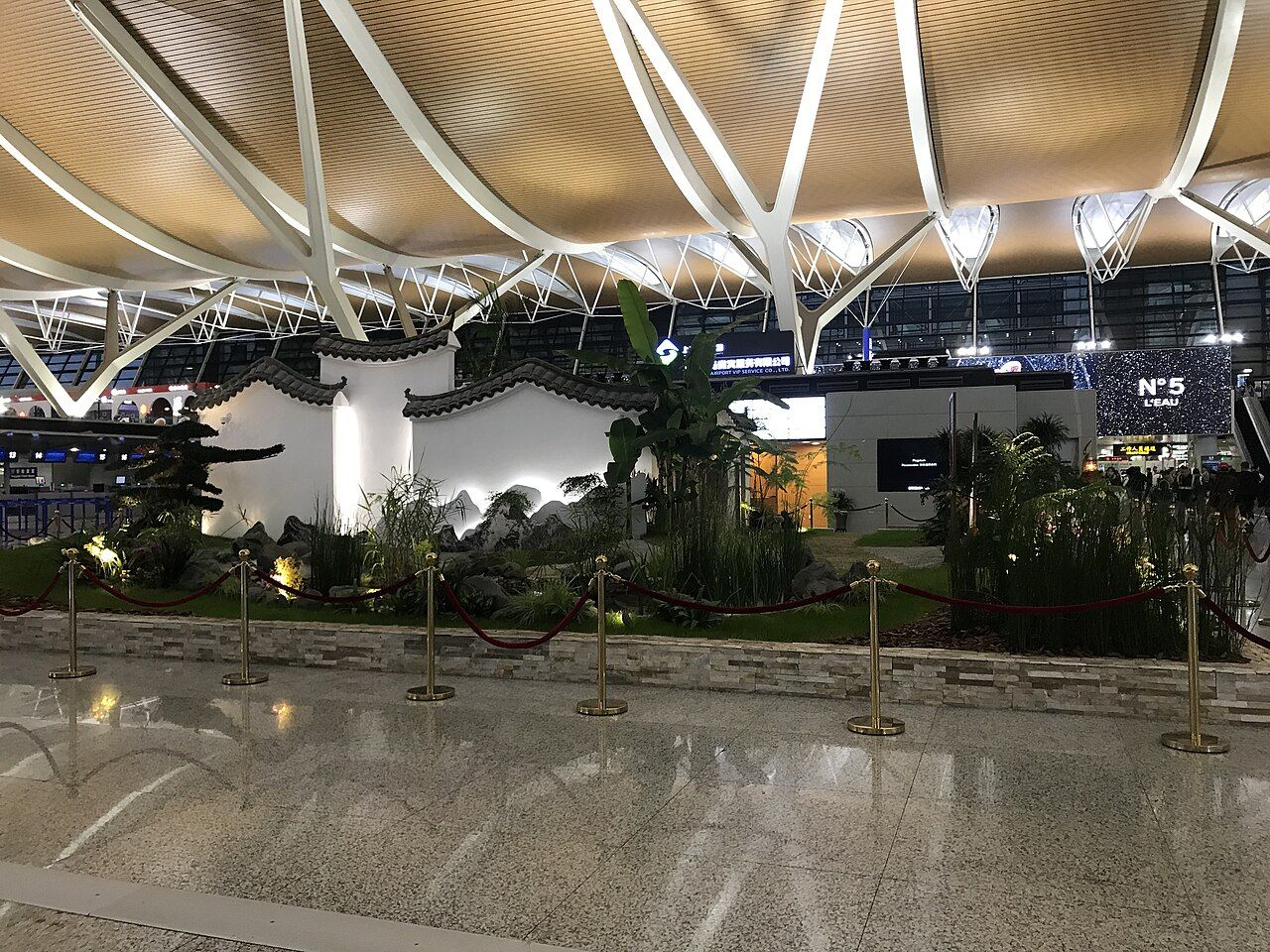
Shanghai Pudong has two main terminals, T1 and T2, plus two satellite concourses, S1 and S2, that sit across the apron and handle a large share of international boarding. An automated people mover links T1 to S1 and T2 to S2 in about 2 minutes, running from early morning until around 11pm.
T1 and T2 face each other across the Maglev and metro station, connected by a landside corridor of roughly 500 meters. Walking it takes 10 to 15 minutes. The official minimum connection time for an international to international transfer across terminals is 120 minutes, and unlike at some airports that figure is not padded. Same terminal transfers use a dedicated transfer channel with a document check and a fresh security screen.
Two pieces of admin define the PVG experience. First, wifi: the free network needs either a Chinese phone number for an SMS code or a passport scan at one of the dedicated kiosks, which prints a PIN. The kiosks exist in both terminals but finding one near your gate is luck. Second, payments: China is functionally cashless, and while the airport itself reports more than 400 merchants taking foreign cards, the city beyond does not. Link a Visa or Mastercard to Alipay or WeChat Pay before travel and the whole country opens up. Cash is legal tender everywhere and a reasonable backup, and there is a service counter in the Pudong arrivals area that bundles SIM cards, transport cards, currency exchange and payment help in one place.
One honest warning: queues here are real. Immigration uses fingerprint kiosks for most foreign nationals aged 14 to 70 before you even reach an officer, and at peak arrival banks the combined process can run past an hour. Every plan below budgets for that.
Hour by hour
What your layover actually buys you
3 hours: stay airside and keep it simple
Three hours at PVG is a connection, not a layover. After the transfer channel document check and security rescreen, expect 60 to 90 minutes of genuinely free time, less if your departure gate is out in a satellite concourse, because the people mover ride plus the walk can absorb 15 to 20 minutes on its own.
Use the time in this order: confirm your gate, ride out to the right concourse, then look for a lounge on the way. If you are departing from Terminal 1 international, the China Eastern lounge No. 36 takes Priority Pass and has showers and enough space that it rarely turns people away. In Terminal 2, the No. 39 lounge sits near security checks 10 and 11 on the departures level. If your connection crosses terminals, skip everything optional. The 120 minute official minimum is tight when the inbound flight is late, and PVG gates close early and without sentiment.
5 hours: lounge, shower, satellite walk
Five hours is the comfortable airside layover. The city is not realistic at this length; immigration both ways plus the train would leave you 30 rushed minutes downtown, which is not a trip, it is a commute with a photo. Stay inside and split the time.
The play: clear the transfer channel, then take the people mover out to your satellite early rather than late. The S2 satellite holds the No. 170 lounge, open roughly 6am to 11pm, which takes Priority Pass and has shower rooms that reviewers consistently rate as the best part of the visit. Budget 2 hours in a lounge for food and a wash, an hour walking the long retail spines, and keep a full hour of buffer for the gate. Food outside the lounges thins out after about 9pm, so on an evening layover eat early. Power outlets are reasonably common at the gates; the wifi kiosk hunt is the bigger annoyance, which is another argument for a lounge with its own network.
8 hours: the city run is real, with a hard budget
With 8 hours and an eligible passport, Shanghai is one of the best layover cities anywhere, and the 240 hour visa free transit policy makes it legal for citizens of 55 countries who hold a confirmed onward ticket to a third country or region. Verify your eligibility before travel; the country list and conditions change, and the onward ticket requirement is enforced at the immigration desk.
The math: budget 60 to 90 minutes for fingerprint kiosks and immigration on arrival. Then the Maglev, the fun option, covers the 30 kilometers to Longyang Road station in 8 minutes at up to 300 km per hour for 50 RMB, or 40 RMB if you show a same day air ticket. From Longyang Road, Metro Line 2 takes you onward, about 15 minutes to Lujiazui for the skyline and the Bund view across the river, or a few stops more to East Nanjing Road for the Bund itself. Metro Line 2 also runs the whole way from the airport for a few RMB, but it takes about an hour to People's Square, so the Maglev plus Line 2 combination is the right call when time is the constraint.
The return rule is firm: be back at the terminal 3 hours before departure. Counting backwards, an 8 hour layover gives you roughly 2.5 to 3 hours in the city, enough for Lujiazui or the Bund and a proper meal, not enough for both sides of the river plus the Yu Garden. Pick one anchor and enjoy it. And check the trains before you commit: the Maglev runs roughly every 15 to 20 minutes from about 7am to 9:40pm, with exact first and last departures to be confirmed, and the last Line 2 train leaves the airport around 10:30pm. Late evening arrivals are taxi territory, which is where that Alipay setup pays for itself.
Overnight: doable, but choose your spot deliberately
PVG stays open overnight and nobody moves sleepers on, but it is not a 24 hour airport in the Dubai sense. Shops shutter, whole gate areas go dark, and announcements echo through mostly empty halls. The honest ranking of your options: a room at the Aerotel inside Terminal 2 near check in islands F and G, which sells stays in hourly blocks from reported rates of about 60 RMB per hour up to around 480 RMB overnight, current pricing to be confirmed; one of the free rest zones with reclining seats that the airport operates around the clock, exact locations to be confirmed; or regular bench seating, most of which has armrests.
If you are flying out early, the Aerotel wins on every measure except price, because it puts a real bed and a shower 5 minutes from check in. If you are saving money, claim a rest zone spot early; they fill by midnight on busy days. Take an eye mask and layers, the air conditioning does not sleep even when you do. For the full map of paid rooms, free corners and which benches to aim for, the PVG sleeping guide covers every option by terminal.
City escape
Leaving the airport: the honest math
| Is leaving realistic | Yes from 7 hours, comfortable from 8 |
| Visa | 240 hour visa free transit for citizens of 55 countries with a confirmed onward ticket to a third country or region. Verify before travel |
| Minutes to the city | 8 by Maglev to Longyang Road, then about 15 on Metro Line 2 to Lujiazui; about 60 on Line 2 all the way to People's Square |
| Transit hours | Maglev roughly 7am to 9:40pm every 15 to 20 minutes; last Metro Line 2 train from the airport around 10:30pm |
| Minimum safe layover to go out | 7 hours, international to international |
| Be back at security | 3 hours before departure |
Two warnings from experience. First, the 240 hour clock starts at midnight after your entry day, but none of that matters on a layover; what matters is the queue, so photograph your onward boarding pass and have it ready at the desk. Second, ride hailing and even some taxis struggle with foreign cards, so a working Alipay or a stack of cash decides whether the city is convenient or stressful. The Maglev ticket office takes cash and cards, which makes the train the low friction choice in both directions.
Check lounge access for PVG
Between the China Eastern lounge No. 36 in Terminal 1, the No. 39 and No. 69 lounges and Plaza Premium in Terminal 2, and the No. 170 lounge in the S2 satellite, Priority Pass covers PVG unusually well. Compare current access options, prices and hours before you fly.
Check lounge accessSome links may earn us a commission at no cost to you.
FAQ
PVG layover questions
Can I leave Shanghai Pudong airport during a layover?
Citizens of 55 countries can use the 240 hour visa free transit policy if they hold a confirmed onward ticket to a third country or region. Budget 60 to 90 minutes for fingerprinting and immigration on arrival and verify your eligibility before travel, because the rules and country list change.
How long does immigration take at PVG?
Most foreign nationals aged 14 to 70 scan fingerprints at kiosks before reaching an officer, and at peak arrival times the whole process can take an hour or more. Off peak it can be 20 minutes. Every city plan should budget the slow case.
Is 2 hours enough to connect at Shanghai Pudong?
Within one terminal on a single ticket, usually yes, though the transfer channel and security rescreen leave little slack. Across terminals the official international minimum is 120 minutes, so 2 hours is the floor, not a buffer, and 3 hours is the comfortable number.
Is wifi free at Shanghai Pudong airport?
Yes, but access requires either a Chinese phone number for an SMS code or a passport scan at a dedicated kiosk that prints a PIN. The kiosks are in both terminals but not at every gate, so connect early or use a lounge network.
How do I pay for things at PVG without Alipay?
The airport reports more than 400 merchants accepting foreign bank cards, and cash is accepted everywhere by law. Beyond the terminal, QR payments dominate, so linking a Visa or Mastercard to Alipay or WeChat Pay before travel is strongly recommended.
How far is downtown Shanghai from PVG?
About 30 kilometers. The Maglev reaches Longyang Road in 8 minutes for 50 RMB, then Metro Line 2 continues to Lujiazui in about 15 minutes. Taking Line 2 the whole way costs a few RMB but takes about an hour to People's Square.
Keep planning
More PVG guides
Shanghai Pudong (PVG) hub guide
The complete PVG layover overview: terminals, quick facts, and how the satellites fit the picture.
Every PVG lounge and how to get in
The full lounge table for both terminals and the satellites with access methods, hours and verdicts.
Sleeping at PVG
The Aerotel, the free rest zones and the bench reality, mapped by terminal for overnight layovers.
Join Gate Notes
Lounge offers and the layover intel you need at 2am, in your inbox before you fly. Free.
No spam. Unsubscribe any time.