Airport hub · PEK · Last reviewed 10 May 2026
Beijing Capital (PEK): The Complete Layover Guide
Beijing's legacy hub is vast, slow moving and entirely survivable, as long as you respect the distances and the document checks.
- Layover verdict
- Workable for a transit stop if you stay inside T3, but budget serious time for any terminal change and expect the wifi login to test your patience.
- Best lounge option
- The BGS Premier Lounge near gate E19 in T3E runs 24 hours, takes Priority Pass and has showers, which makes it the default for international connections.
- The one thing to know
- There is no airside link between T2 and T3, so a terminal change means immigration, a landside shuttle and a fresh security line; the airport publishes 120 minutes as the minimum and you should treat that as optimistic.
Quick facts
Beijing Capital at a glance
| Terminals | T2 and T3, with T3 split into concourses T3C, T3D and T3E; the old T1 reopened in 2023 as a satellite wing of T2 |
|---|---|
| Airside transit between terminals | No. T2 to T3 means immigration, a free landside shuttle of about 15 minutes, then security again |
| Free wifi | Free and unlimited, but you need an SMS code or a passport scan at a self service kiosk to log in |
| Sleep friendliness | Tolerated and feasible; terminals stay open all night, T3 has the best spots, and it gets cold |
| Lounge count | 8 lounges take Priority Pass across T2 and T3; the full count is to be confirmed |
| Nearest in terminal hotel | None inside the terminals; the Hilton Beijing Capital Airport sits beside T3, about a 7 minute walk or a free shuttle |
Orientation
How PEK is laid out and where your time actually goes
.jpg)
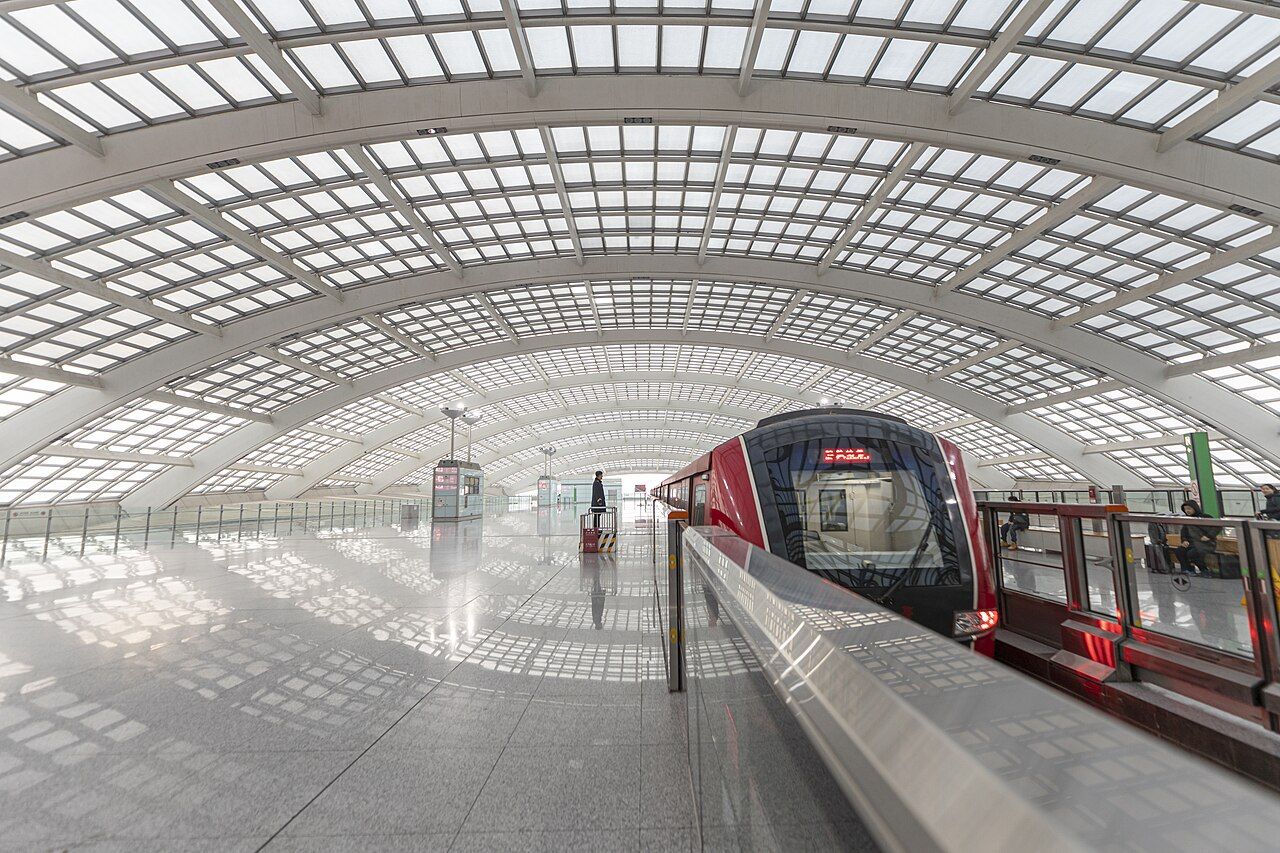
PEK runs on two working terminals, and the difference between them shapes your whole layover. T2 sits beside the old T1, which closed in 2020 and reopened in August 2023 as a satellite wing of T2 rather than a standalone terminal. T3, across the airfield, is where Air China and most Star Alliance carriers operate, and it handles the bulk of the international traffic that stayed at Capital after Beijing Daxing opened in 2019. SkyTeam carriers, including China Eastern and China Southern, moved south to Daxing, so if your ticket says PKX you are reading the wrong page.
T3 deserves respect. It was the largest passenger terminal building in the world when it opened ahead of the 2008 Olympics, stretching close to three kilometers from end to end, and it still swallows first time visitors. The building splits into three concourses: T3C holds check in and the domestic gates, T3D handles Air China domestic flights, and T3E takes every international departure plus Hong Kong, Macau and Taiwan. A driverless internal train links the concourses, and the ride itself takes only a few minutes. Add the escalators, the platform waits and the raw walking distance, though, and moving from the check in rows to a far T3E gate can eat 20 to 30 minutes without you doing anything wrong.
There is no airside connection between T2 and T3. Changing terminals means clearing immigration, collecting any bags that were not checked through, riding the free landside shuttle and starting over at security. The shuttle runs 24 hours, leaving from gates 7 to 9 on the T3 arrivals level and gate 7 at T2, every 10 minutes during the day and every 30 minutes between 23:00 and 06:00, with a ride of about 15 minutes. The airport publishes 120 minutes as the minimum connection time for an international to international transfer across terminals. Treat that as a floor, not a promise. Three hours is the number I would actually book.
Transit immigration is the part people underestimate. Even connecting passengers face document checks, and arriving foreigners record fingerprints at self service machines before joining the inspection queues. If you want to leave the airport, citizens of 55 countries can use China's 240 hour visa free transit policy, which since December 2024 allows up to 10 days in the country, provided you continue to a third country or region on a confirmed ticket. T3 immigration has a dedicated channel for transit permit applicants, and you complete a digital arrival card in advance through the National Immigration Administration site. Queue times swing hard with arrival banks, so give yourself a generous buffer at peak periods and verify the visa rules before travel.
The free wifi is real but earns its asterisk. The network is unlimited and reasonably quick, but you cannot simply tap and connect. You either receive a login code by SMS, useless without roaming, or you feed your passport into one of the self service kiosks scattered through the terminals, which scans the photo page and dispenses a code. Find the kiosk before you need it. And remember the connection sits behind China's internet filters: Google, Gmail, WhatsApp and most Western apps will not load unless you arrive with a VPN already installed or use international roaming data.
Overnight, the terminals stay open and nobody moves you along, but the building changes character. Most shops and counters close, the cleaning crews take over, and the air conditioning makes T3 genuinely cold after midnight; regulars bring a layer. The Airport Express train into the city is a 25 yuan ride that reaches Dongzhimen in about 25 minutes, but it stops mid evening, with the last city bound departure from T3 at 22:51 and service resuming at 06:21, so a late arrival means a taxi or a long wait. What surprises people most is the pace. Signage is good and staff are used to confused transit passengers, yet every process here assumes you have time, and rushing PEK almost never works.
Plan the hours
Your PEK layover, piece by piece
PEK rewards preparation far more than improvisation. Each guide below takes one piece of the layover and goes deep.
FAQ
Beijing Capital layover questions
Do I need a visa for a layover in Beijing?
Not necessarily. Citizens of 55 countries can use China's 240 hour visa free transit policy to enter for up to 10 days, provided they hold a confirmed onward ticket to a third country or region. Rules change and eligibility is checked at the border, so verify before travel with an official Chinese government source.
Can you sleep overnight at Beijing Capital airport?
Yes. The terminals stay open around the clock, staff tolerate sleepers, and T3 has the most comfortable landside seating. It gets cold after midnight, so bring a layer or a blanket.
How long does it take to transfer between T2 and T3?
The free shuttle bus ride is about 15 minutes and runs 24 hours, every 10 minutes by day and every 30 minutes between 23:00 and 06:00. The full process with immigration and a fresh security check takes far longer; the airport publishes 120 minutes as the minimum for an international to international change, and three hours is a saner plan.
Does Priority Pass work at PEK?
Yes, 8 lounges at Beijing Capital accept Priority Pass. The most useful for international travelers is the BGS Premier Lounge near gate E19 in T3E, which is open 24 hours and has showers. Access depends on departing from the matching terminal and concourse.
Is the PEK wifi usable without a Chinese phone number?
Yes. Scan your passport at one of the wifi kiosks in any terminal and it dispenses a login code, no Chinese SIM needed. Chinese internet filtering still applies, so Google, Gmail and WhatsApp will not load without a VPN already installed or international roaming data.
Check lounge access at PEK
Lounge access at PEK depends on which terminal and concourse your boarding pass can reach. Our directory lists every lounge we can verify, its hours and every card or program that opens the door.
Some links may earn us a commission at no cost to you.
Nearby
Related airports
Join Gate Notes
Lounge offers and the layover intel you need at 2am, in your inbox before you fly. Free.
No spam. Unsubscribe any time.