Airport hub guide
Santiago Arturo Merino Benitez SCL: the complete layover guide
Two terminals side by side, a genuinely good new international building, free unlimited wifi, and one immigration step that ambushes anyone connecting onward to a domestic flight. Here is how to run a Santiago layover.
Layover verdict Good for daytime layovers of 3 to 8 hours. T2 is modern and bright with solid food and lounge options, and both terminals run 24 hours. Overnights are survivable rather than pleasant because there are no rest zones or sleep pods.
Best lounge play The Pacific Club lounges operate in both terminals, take Priority Pass and sell entry at the door, so you can get a quiet seat and a hot meal without status or a business class ticket.
The one thing to know Connecting from an international arrival to a domestic flight means clearing Chilean immigration, collecting your bags and changing terminals. The published minimum is 110 minutes and it really is a minimum.
Last reviewed 23 April 2026
Quick facts
Santiago at a glance
| Terminals | 2 (T1 domestic, T2 international since February 2022) |
| Airside transit between terminals | No. Terminal changes are landside via a 10 to 15 minute walkway or a free shuttle bus every 10 to 15 minutes, then new security screening |
| Free wifi | Yes, free and unlimited on the official airport network; expect to reconnect periodically |
| Sleep friendliness | Fair. Open 24 hours with quieter airside corners, but no dedicated rest zones or sleep pods |
| Lounge count | About 6 across both terminals, led by LATAM and Pacific Club; exact roster to be confirmed |
| Nearest in terminal hotel | Holiday Inn Santiago Airport Terminal, directly opposite the terminal via an internal walkway |
Orientation
How Santiago is laid out
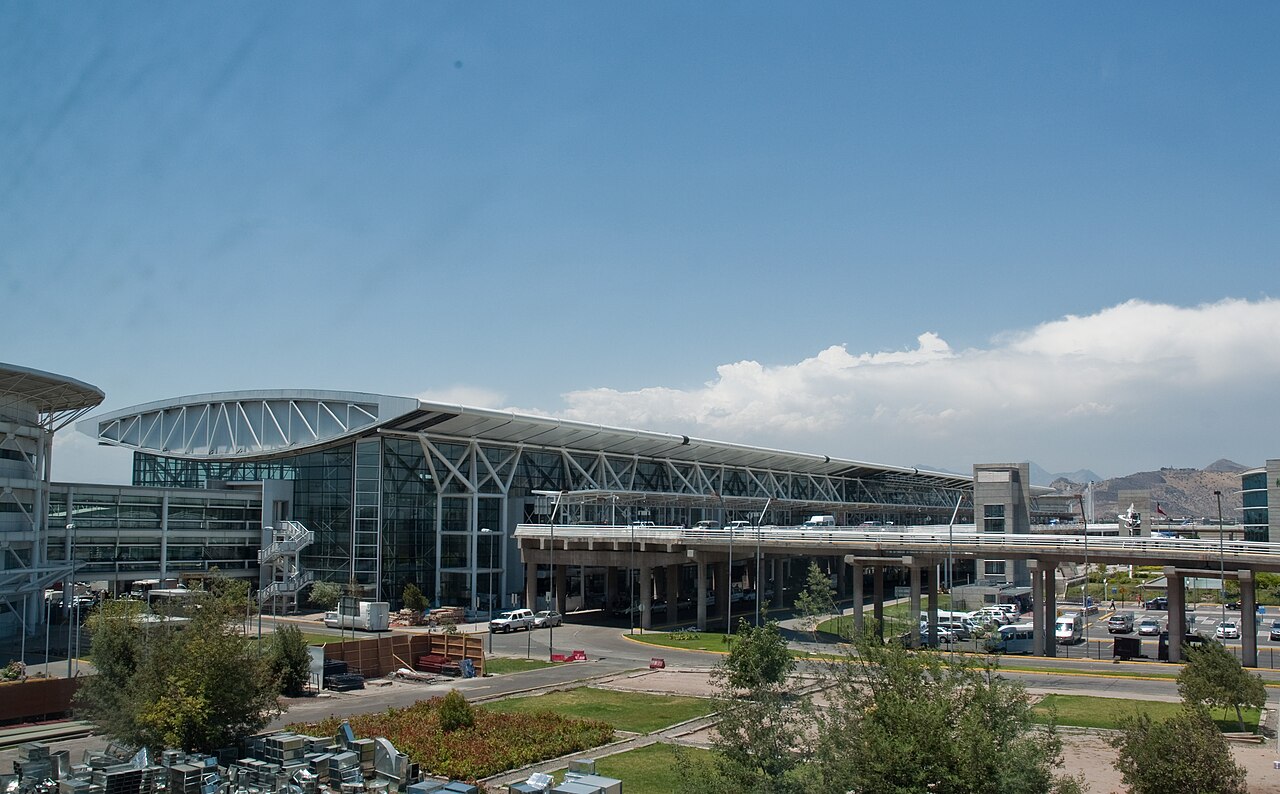
SCL is a two building airport: T2, the big international terminal that opened in February 2022, and T1, the older domestic terminal sitting right beside it.
Every international flight uses T2. The building covers roughly 248,000 square meters, about double the size of the old terminal, and it shows its youth in the best way: high ceilings, daylight, working escalators, and enough seating that you are not fighting for a bench at gate level. Departures sit on the third floor with self service bag drop machines, arrivals exit on the ground floor. T1, the original terminal, now handles only domestic flights, and a refurbishment program has been working through it section by section, so expect some construction noise on the domestic side.
Moving between the two buildings is simple but it happens landside. A pedestrian route with travelators links the terminals over about 500 meters; allow 10 to 15 minutes at a normal walk with bags. There is also a free shuttle bus running every 10 to 15 minutes around the clock, worth taking in rain since part of the walking route is exposed. Whichever you choose, you clear security again at the next terminal, so a terminal change is never a five minute errand.
Connections are where Santiago demands respect. Domestic to international on a single LATAM ticket carries a published minimum of 75 minutes, and that works because your bags transfer automatically. International to domestic is the trap: you clear Chilean immigration, collect your bags, pass customs and agricultural inspection, then move to T1 and drop the bags again. The published minimum is 110 minutes. On time inbound, light immigration queues, no checked bags, fine. Any friction and you are rebooking. On separate tickets, treat 3 hours as the floor and do not argue with the floor.
Heading into the city, there is no rail link, so it comes down to road. The Centropuerto and Turbus buses leave from outside arrivals and reach the Pajaritos and Los Heroes metro stations in 35 to 45 minutes for a few dollars, which makes them the best value by a mile. Official taxis booked at the counters in the arrivals hall run about 20,000 to 30,000 Chilean pesos to downtown or Providencia and take 25 to 40 minutes outside rush hour. Rideshare apps work and usually undercut the taxi counters slightly. Downtown is about 15 kilometers away, close enough that a city run on a 7 hour layover is realistic if immigration is kind.
Wifi is free and unlimited in both terminals on the official airport network. Sessions can drop and force a reconnect, which is irritating on a video call, but there is no data cap and no fee. Power outlets and charging points are spread through the gate areas in T2, more thinly in T1.
Terminal by terminal
What each terminal gives you
Terminal 2, international
The terminal Santiago waited decades for, and the one you will most likely see on a layover. All international carriers operate here, LATAM included, and the airside area is where the airport keeps its good stuff: the flagship LATAM lounge, billed as the largest in South America when it opened, the Pacific Club international lounge near the C pier, a SkyTeam lounge for passengers on SkyTeam flights, and a respectable run of restaurants and duty free. The LATAM lounge needs a premium cabin or oneworld status. The Pacific Club takes Priority Pass and paid entry, which makes it the default play for everyone else. Seating at the gates is plentiful and some benches lack armrests, which matters more at 3am than any design award.
Terminal 1, domestic
The old international terminal, now domestic only and partway through a rebuild. It is functional rather than charming: shorter on food, shorter on seating, and busier per square meter than T2 whenever a bank of LATAM and SKY Airline departures stacks up. The Pacific Club runs lounges on the domestic side too, with Priority Pass and door entry accepted, and they are the only calm corner of the building. If your layover involves a long wait for a domestic leg, eat in T2 before you walk over.
Between the terminals
The walkway and the free shuttle both work fine in daylight. At night the shuttle is the better call, and either way budget the full 15 minutes plus the security queue on arrival at the next building. There is no airside corridor between T1 and T2, so never plan a terminal change with less than an hour in hand.
Guides
Santiago deep dives
SCL layover guide
What 3, 5 and 8 hours buy you at Santiago, hour by hour, and when downtown is realistic.
SCL lounges
Every lounge across both terminals with locations, access methods and day pass prices.
Sleeping at SCL
The overnight reality, the quieter airside corners and the Holiday Inn across the road.
Check lounge access for SCL
Several Santiago lounges sell entry to any traveler regardless of airline or cabin, and Priority Pass covers the Pacific Club locations in both terminals. Compare current access options, prices and hours before you fly.
Check lounge accessSome links may earn us a commission at no cost to you.
FAQ
Santiago layover questions
Can I sleep overnight at Santiago airport?
Yes. Both terminals stay open 24 hours and security runs around the clock, so you can stay airside or landside. There are no dedicated rest zones or sleep pods; travelers report the gate areas inside security are quieter and warmer than the public halls. The Holiday Inn directly opposite the terminal is the paid fallback.
How do I transfer between terminals at SCL?
T1 and T2 sit next to each other. Walk the connecting route in about 10 to 15 minutes, with travelators covering much of it, or take the free shuttle bus that runs every 10 to 15 minutes around the clock. Either way you pass security again at the next terminal.
Is wifi free at Santiago airport?
Yes. Free unlimited wifi runs in both terminals on the official airport network. Sessions can time out, so expect to reconnect, but there is no data cap or fee.
Do I need a transit visa for Chile?
Chile has no airport transit visa. If you stay airside in T2 for an international to international connection, you do not pass immigration. Connecting to a domestic flight means formally entering Chile, so the normal entry rules for your nationality apply; verify before travel.
How long do I need to connect at Santiago airport?
On a single LATAM ticket, the published minimum is 75 minutes from domestic to international and 110 minutes from international to domestic, because the latter includes immigration, baggage collection and customs. On separate tickets, treat 3 hours as the floor.
How do I get from SCL to downtown Santiago?
The Centropuerto and Turbus buses reach the Pajaritos and Los Heroes metro stations in 35 to 45 minutes for a few dollars. Official taxis booked at the arrivals hall counters run about 20,000 to 30,000 Chilean pesos to the center and take 25 to 40 minutes outside rush hour.
Nearby
Related airports
Lima Jorge Chavez (LIM)
The other big west coast hub of South America and a frequent pairing with SCL on north south routings. A very different overnight experience.
Buenos Aires Ezeiza (EZE)
Santiago's neighbor across the Andes, two hours away by air. Common as the other end of a regional connection through SCL.
Bogota El Dorado (BOG)
The Avianca megahub to the north. If your South America itinerary does not connect in Santiago or Lima, it probably connects here.
Join Gate Notes
Lounge offers and the layover intel you need at 2am, in your inbox before you fly. Free.
No spam. Unsubscribe any time.