Airport hub guide
Yangon International RGN: the complete layover guide
International service into Yangon has thinned sharply since 2021, which makes RGN a small, quiet stop: one international terminal, a short list of regional airlines, and a city about 15 km away. Here is what a layover there actually looks like.
Layover verdict Manageable for short daytime connections because everything international happens in one compact terminal with short queues, but thin on comfort: limited food, 30 minute wifi sessions and no rest zone. Bring your own entertainment and snacks.
Best lounge play The Mingalar Sky lounges in Terminal 1 take Priority Pass and are the only meaningful comfort upgrade at RGN. Confirm hours on the day, since they track the reduced flight schedule.
The one thing to know Myanmar's situation since 2021 has cut international service heavily and schedules change at short notice. Reconfirm your flight close to departure and check your government's travel advisory before planning to leave the airport.
Last reviewed 18 May 2026
Quick facts
Yangon at a glance
| Terminals | 3 buildings: Terminal 1 handles all international flights, Terminal 3 all domestic, Terminal 2 closed |
| Airside transit between terminals | None; changing between international and domestic means a landside building change |
| Free wifi | Yes, WiFi@YIA in Terminal 1; registration gives a 30 minute session at a time |
| Sleep friendliness | Poor to fair. Travelers report overnight stays in Terminal 1 are tolerated, but benches without armrests are scarce |
| Lounge count | 3 Mingalar Sky lounges on current Priority Pass listings: 2 in Terminal 1, 1 in Terminal 3 |
| Nearest in terminal hotel | None confirmed inside the terminals; hotels near the perimeter and downtown exist, verify current operating status before booking |
Orientation
How Yangon International is laid out
Yangon International sits in Mingaladon township about 15 km north of downtown Yangon, and the working version of the airport is two buildings: Terminal 1 for every international flight and Terminal 3 for every domestic one.
Terminal 1 opened in March 2016 and took over the international operation from the older building next door, which became Terminal 2 and is now closed. Terminal 3, the domestic terminal, followed in December 2016. There is no airside link between the buildings, so an international to domestic connection means exiting, covering the short distance between terminals landside, and clearing security again. Allow a full hour for the building change even though the distance is small, and ask your airline how it handles bags on a through ticket.
The bigger story is the schedule. Myanmar's situation since 2021 has cut international service into Yangon hard. Many carriers that served the city before 2020 have not returned, and what remains is a regional operation: as of mid 2026 around 16 airlines connect RGN with roughly 38 airports, and the Bangkok and Singapore routes alone account for about a third of monthly arrivals. Thai Airways, Thai AirAsia, Singapore Airlines, Malaysia Airlines and Air China fly in from abroad, while home carriers Myanmar Airways International and Myanmar National Airlines fill out the board, including the longest route on it, the MAI service to Dubai at around six hours. Schedules change at short notice, sometimes within weeks, so treat any printed timetable as provisional and reconfirm your flight a few days out.
Getting downtown is straightforward by Yangon standards. There is no rail link worth planning around, so the choice is road. A Grab car or taxi covers the 15 km to the Sule Pagoda area in about 30 minutes off peak and an hour or more in the morning and late afternoon crushes. Grab works well at RGN, and recent travelers report fares around 20,000 kyat to downtown, a few US dollars at current rates, though kyat prices move quickly with the exchange rate. Regular taxis rarely run meters, so agree the fare before you get in. The YBS airport bus reaches the city centre in about 50 minutes for a token fare of around 500 kyat; its current frequency and operating hours are to be confirmed, so do not stake a tight connection on it.
Leaving the airport requires a visa for most nationalities, and Myanmar offers no general transit exemption for city visits. The tourist eVisa costs 50 US dollars, is issued within about 3 working days, stays valid for 90 days from issue and allows a single entry with a stay of up to 28 days. Yangon International is one of the few approved eVisa entry points, your passport needs at least 6 months of validity, and the application asks for proof of a hotel booking. All of this can change at short notice, so verify before travel.
One more thing, stated plainly. Given the situation in the country, read your own government's current travel advisory for Myanmar before deciding to leave the terminal. Several governments advise against some or all travel there, and your travel insurance may depend on that advice. Transit through the airport is a different calculation from a city visit; make it deliberately.
Inside the terminal
What the terminals give you
Terminal 1: the international building
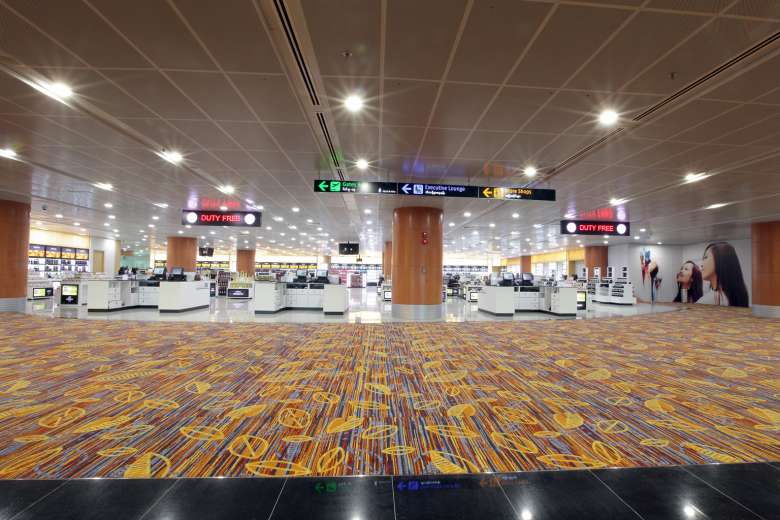
Terminal 1 is compact and modern, built for far more traffic than it currently sees, which works in your favor: queues are short, walks are short, and the gates sit minutes from security. Check in is on the departures level, immigration and security lead you to the airside departures area, and a duty free run delivers you to the gate seating. Food and retail are the weak points. Outlets are limited and their hours track the reduced flight schedule rather than the clock, so eat when you see food rather than assuming something will be open later, and carry snacks of your own on an evening connection.
Wifi is free on the WiFi@YIA network, with a catch: registration buys you a 30 minute session at a time, after which you sign in again. That is workable for messages and email, less so for anything heavy, so download your entertainment, offline maps and boarding passes before you land. Power outlet availability in the gate areas is to be confirmed, so board with a full battery.
The lounges: Mingalar Sky
Lounge access at RGN means one name: Mingalar Sky. Priority Pass currently lists three rooms, two in Terminal 1 and one in the domestic Terminal 3. The main Terminal 1 lounge sits airside on the second floor near gates 4 and 5, behind duty free, and offers a hot buffet, a bar and showers along with its own wifi. It is the only meaningful comfort upgrade in the building, so if you hold Priority Pass or a card with lounge benefits, use it. Confirm opening hours on the day; like everything at RGN they follow the flight schedule, and a lounge listed as open can sit dark between departure banks.
Terminal 3 and the closed Terminal 2
Terminal 3 handles all domestic flights on Myanmar National Airlines and the other local carriers. It is the newest building on the field, opened in December 2016, and it carries its own Mingalar Sky lounge on the Priority Pass list. Terminal 2, the original international terminal, is closed; the airport describes it as under renovation, with no reopening date we can verify. If older information routes you to Terminal 2, ignore it. International means Terminal 1, full stop.
The overnight reality
Yangon International is not a 24 hour operation in any meaningful sense. The flight board empties in the evening and the terminals go quiet. Travelers report that staff generally tolerate ticketed passengers staying overnight in Terminal 1 ahead of early departures, but there is no rest zone, benches without armrests are scarce, and overnight food options are close to zero. If your connection crosses the small hours, the honest play is a downtown hotel and a Grab back out in the morning, or a hotel near the airport perimeter if you can verify it is currently operating. Treat the terminal floor as a fallback, not a plan, and keep expectations modest: this is a quiet airport in a country going through a hard period, and the basics work better than the extras.
Check lounge access for RGN
The Mingalar Sky lounges are the only real comfort upgrade at Yangon International, and several access programs cover them. Compare current access options, prices and hours before you fly.
Check lounge accessSome links may earn us a commission at no cost to you.
FAQ
Yangon layover questions
Can I sleep overnight at Yangon airport (RGN)?
Travelers report that Terminal 1 stays open overnight and staff generally tolerate ticketed passengers waiting for early flights. There is no dedicated rest zone and benches without armrests are scarce, so bring a mat or pick a hotel if real sleep matters.
Is wifi free at Yangon airport?
Yes. Terminal 1 offers free wifi on the WiFi@YIA network, but registration gives you a 30 minute session at a time. Download anything important before you land.
Which terminal handles international flights at RGN?
Terminal 1 handles all international flights and Terminal 3 handles all domestic flights. Terminal 2, the old international terminal, is closed.
Do I need a visa for a layover in Yangon?
If you stay airside in transit you generally do not, but leaving the airport requires a visa for most nationalities. The tourist eVisa costs 50 US dollars, takes about 3 working days to issue and allows a stay of up to 28 days. Rules change at short notice, so verify before travel.
How do I get from Yangon airport to downtown?
Downtown Yangon is about 15 km south of the airport. A Grab car or taxi takes 30 to 60 minutes depending on traffic; agree the fare before you get into a regular taxi, since meters are rare. The YBS airport bus reaches the city centre in about 50 minutes for a token fare.
Which airlines still fly internationally to Yangon?
As of mid 2026 around 16 airlines connect Yangon with roughly 38 airports, and Bangkok and Singapore are the busiest routes. Carriers include Thai Airways, Thai AirAsia, Singapore Airlines, Malaysia Airlines, Air China and Myanmar Airways International. Schedules change fast, so check close to departure.
Guides
Yangon deep dives
RGN layover guide
What 3, 5 and 8 hours buy you at Yangon, hour by hour, and the honest math on a downtown run.
RGN lounges
The Mingalar Sky lounges across Terminals 1 and 3, with locations, access methods and the hours catch.
Sleeping at RGN
The overnight reality in Terminal 1, why there is no rest zone, and the beds worth booking nearby.
Nearby
Related airports
Bangkok Suvarnabhumi (BKK)
The busiest route out of Yangon and the most common connecting hub for Myanmar itineraries, about 80 minutes away by air.
Singapore Changi (SIN)
The second pillar of the RGN schedule, around 3 hours by air, and the most comfortable place in the region to spend a long connection.
Kuala Lumpur (KUL)
A frequent connecting point for Yangon traffic, roughly 3 hours by air, with deep low fare coverage across Southeast Asia.
Join Gate Notes
Lounge offers and the layover intel you need at 2am, in your inbox before you fly. Free.
No spam. Unsubscribe any time.