Airport hub guide
Kathmandu Tribhuvan KTM: the complete layover guide
Two separate terminals, one verifiable lounge, a building that closes at night, and a six dollar taxi to Thamel. Tribhuvan is chaotic but predictable once you learn its rhythms, and this guide hands you those rhythms.
Layover verdict Workable for daytime layovers of 4 hours or more if you keep your plan loose, and a bad idea overnight: the terminal has historically closed at night, and taxiway construction kept flight operations shut from 11:45 pm to 6:30 am into May 2026. Book a hotel for any layover that crosses midnight.
Best lounge play The Executive Lounge upstairs in the international terminal, run by the Radisson Hotel Kathmandu, takes Priority Pass, DragonPass and LoungeKey and sells entry at the door. It is the only lounge at KTM we can verify, so do not expect a choice.
The one thing to know International and domestic are two separate buildings about 500 metres apart with no airside link. Every connection means exiting one terminal and entering the other, so treat 3 hours as the floor for an international to domestic transfer.
Last reviewed 5 May 2026
Quick facts
Tribhuvan at a glance
| Terminals | 2 separate buildings: international, plus a domestic terminal about 500 metres to its north |
| Airside transit between terminals | None. You exit and cover the distance landside, on foot or by the terminal shuttle when it runs |
| Free wifi | Yes in the international terminal, including the Free_TIA_WorldLink_WIFI network; registration may be required |
| Sleep friendliness | Poor. The terminal has historically closed overnight and there are no rest zones or pods |
| Lounge count | 1 verifiable: the Executive Lounge in the international terminal, run by the Radisson Hotel Kathmandu |
| Nearest in terminal hotel | None inside the airport. Nearby hotels run shuttles, and Thamel is about 6 km away by road |
Orientation
How Tribhuvan is laid out
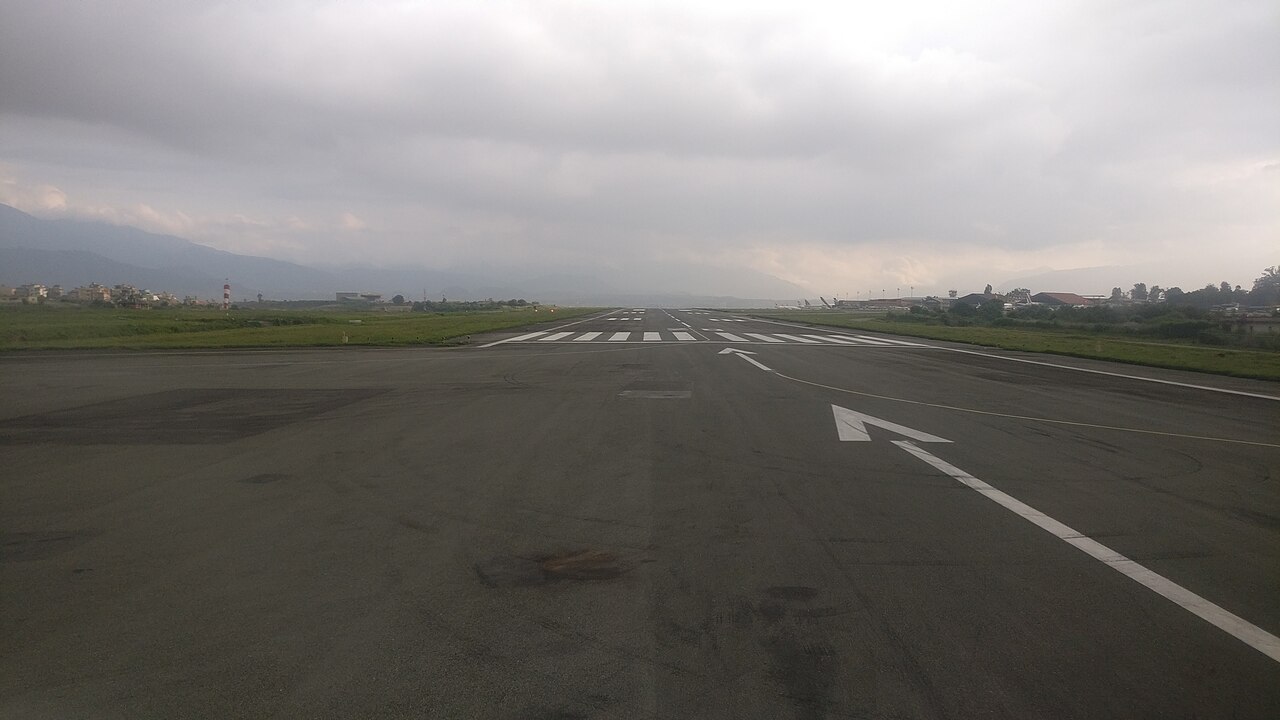
Tribhuvan sits about 6 km east of central Kathmandu, wedged into the valley with a single runway and two passenger buildings. The international terminal handles every flight in and out of Nepal from abroad; the domestic terminal, roughly 500 metres north, handles the mountain network to Lukla, Pokhara, Bharatpur and the rest of the country.
The two buildings are not connected inside. Moving between them means exiting onto the landside road and either walking, which takes around 10 minutes with bags, or catching the shuttle bus that has run between the terminals free of charge; its current schedule is to be confirmed, so budget for the walk. This single fact shapes every connection at KTM. There is no airside transfer, no transit corridor, and no skipping the queues at the second building.
Arriving from abroad, the sequence is fixed: visa on arrival if you need one, immigration, baggage, customs, exit. The visa on arrival counters sit before immigration and the queue length swings wildly with the season. Tourist visa fees as of this review are US$30 for 15 days, US$50 for 30 days and US$125 for 90 days, paid at a bank counter that strongly prefers clean US dollar cash; cards are unreliable here. Filling the online arrival form before you fly saves real time. Not every nationality qualifies, so verify before travel.
The morning is the hard part of the day. Domestic mountain flights leave at first light to beat the afternoon winds and cloud, international departures bank through the same hours, and the night construction closures have squeezed the whole schedule into a shorter operating day. The result is that 6 to 10 am puts a queue at every checkpoint: the terminal entrance, check in, immigration and security. Land in that window, or fly out in it, and you should add a full hour to whatever plan you had.
Getting to the city is cheap and quick by big airport standards. The prepaid taxi counter in international arrivals charged around 900 Nepali rupees to Thamel in early 2026, roughly 6 US dollars, with a small surcharge after 9 pm. The ride covers about 6 km and takes 15 to 20 minutes in light traffic; daytime congestion can stretch that well past half an hour. Many Thamel hotels will also arrange a pickup if you ask ahead, which removes the arrivals scrum entirely and often costs little more than the counter rate.
The airport is mid rebuild. A parallel taxiway project, the reason for the night closures, is due to finish around the end of 2026 and should let the single runway handle far more movements per hour. Beyond that, plans call for a new international terminal building sized for around 10 million passengers a year, with the current international terminal converted to domestic use under the master plan. Timelines for the new building are to be confirmed, so expect hoardings, detours and noise for a while yet.
Inside the terminal
What the KTM terminals give you
Landside in the international terminal
The international terminal is compact and functional. Departures run through a single check in hall where airline desks open around 3 hours before each flight, and the entrance itself is controlled, so only ticketed passengers get inside. Landside food and shopping are thin: a handful of snack counters and small shops cover the basics and nothing more. If you want a proper meal before a long queue heavy departure, eat in the city or at your hotel first.
Airside and the Executive Lounge
After passport control, a stairway and escalator on the right lead up to the Executive Lounge on the second floor, operated by the Radisson Hotel Kathmandu and serving the airport since 2009. It accepts Priority Pass, DragonPass and LoungeKey, and it sells entry at the door to any passenger regardless of airline or cabin; the current walk up price is to be confirmed. Inside you get a hot buffet, a basic bar, free wifi and a nap area with recliner seats, which matters at an airport with no other quiet corner. It is the only lounge at KTM we can verify, so when it fills during the morning and evening banks there is no fallback. Gate seating beyond it is standard bench fare, and the duty free run is small.
The domestic terminal
The domestic terminal is far more basic: small waiting halls, a few snack counters and essential services only. It is also the more intense building in the early morning, when trekking season traffic to Lukla and Pokhara stacks departures into the first hours of daylight. Weather delays ripple through the mountain schedule constantly, so if your layover involves a domestic leg, build slack into it and keep your airline's desk in sight when the boards stop updating.
Overnight and the morning crush
Do not plan to sleep at Tribhuvan. The terminal has historically closed overnight, with travelers not holding a same day boarding pass asked to leave, and there are no rest zones, pods or in terminal hotels. On top of that, the taxiway works shut all flight operations from 11:45 pm to 6:30 am on a schedule announced through 18 May 2026; whether full overnight operations have resumed since is to be confirmed. The practical answer for any layover crossing midnight is a hotel. Thamel is 15 to 20 minutes away with beds at every price, and several airport area hotels run shuttles. Come back no later than 3 hours before an international departure, and earlier still inside the 6 to 10 am crush.
Your layover, planned
The KTM guides
Tribhuvan layover guide, hour by hour
What 3, 5 and 8 hours buy you at KTM, the two terminal walk, the lounges and the cheap taxi to Thamel.
KTM lounges and how to get in
Both international lounges, the Executive Lounge and the Horizon Lounge by Soaltee, with access methods and what is inside.
Sleeping at KTM
The overnight closure, the morning crush and the hotels near the airport and in Thamel.
Check lounge access for KTM
The Executive Lounge in the international terminal admits Priority Pass, DragonPass and LoungeKey members and sells entry to any traveler regardless of airline or cabin. Compare current access options and prices before you fly.
Check lounge accessSome links may earn us a commission at no cost to you.
FAQ
Tribhuvan layover questions
Can I sleep overnight at Kathmandu airport?
No, do not plan on it. Tribhuvan has historically closed its terminal overnight, and taxiway construction stopped all flight operations from 11:45 pm to 6:30 am on a schedule announced through 18 May 2026. Book a nearby hotel or a room in Thamel instead; both are within about 20 minutes of the airport.
Is wifi free at Kathmandu airport?
Yes, the international terminal offers free wifi, including on the Free_TIA_WorldLink_WIFI network. Registration may be required and speeds drop noticeably at peak times, so download anything important before you land.
Does KTM accept Priority Pass?
Yes, at one lounge. The Executive Lounge on the second floor of the international terminal, run by the Radisson Hotel Kathmandu, accepts Priority Pass, DragonPass and LoungeKey, and also sells entry at the door to any passenger.
How much is a taxi from KTM to Thamel?
The prepaid taxi counter in international arrivals charged around 900 Nepali rupees in early 2026, roughly 6 US dollars, with a small surcharge after 9 pm. The ride covers about 6 km and takes 15 to 20 minutes in light traffic, noticeably longer in daytime congestion.
How much does a Nepal visa on arrival cost at KTM?
US$30 for 15 days, US$50 for 30 days and US$125 for 90 days as of this review, paid at a bank counter before immigration that strongly prefers clean US dollar cash. Not every nationality is eligible and rules change, so verify before travel.
How long should I allow for an international to domestic connection at KTM?
Treat 3 hours as the floor. You clear immigration, collect bags, exit the international terminal and cover about 500 metres landside to the separate domestic terminal, and the 6 to 10 am rush slows every step. Add more time if you need a visa on arrival.
Nearby
Related airports
Delhi Indira Gandhi (DEL)
The biggest hub feeding Kathmandu, about 90 minutes away by air. Most one stop itineraries between Nepal and Europe or North America connect here.
Colombo Bandaranaike (CMB)
Sri Lanka's main gateway and another South Asian connection option for travelers heading onward from Kathmandu.
Bangkok Suvarnabhumi (BKK)
The big Southeast Asian hub where many itineraries between Nepal and East Asia or Australia make their connection.
Join Gate Notes
Lounge offers and the layover intel you need at 2am, in your inbox before you fly. Free.
No spam. Unsubscribe any time.