Airport hub guide
Islamabad International ISB: the complete layover guide
One purpose built terminal from 2018, two CIP lounges that take Priority Pass, free wifi with a registration catch, and a city that sits 25 km down the motorway. Here is how to handle a layover at Islamabad without the guesswork.
Layover verdict Comfortable for connections of 2 to 5 hours because everything happens under one roof and the international CIP lounge runs around the clock, weak overnight because the airport has no hotel, no rest zones and seating built around fixed armrests.
Best lounge play The CIP lounge in international departures takes Priority Pass and sells walk in entry at the door for about 20 US dollars, with the domestic CIP lounge opposite Gates C3 and C4 doing the same for a few hundred rupees.
The one thing to know Expect a body and baggage search at the terminal entrance before you even reach check in, and note that the wifi login normally wants a Pakistani mobile number, so foreign travelers should head to the information desk for credentials.
Last reviewed 14 May 2026
Quick facts
Islamabad at a glance
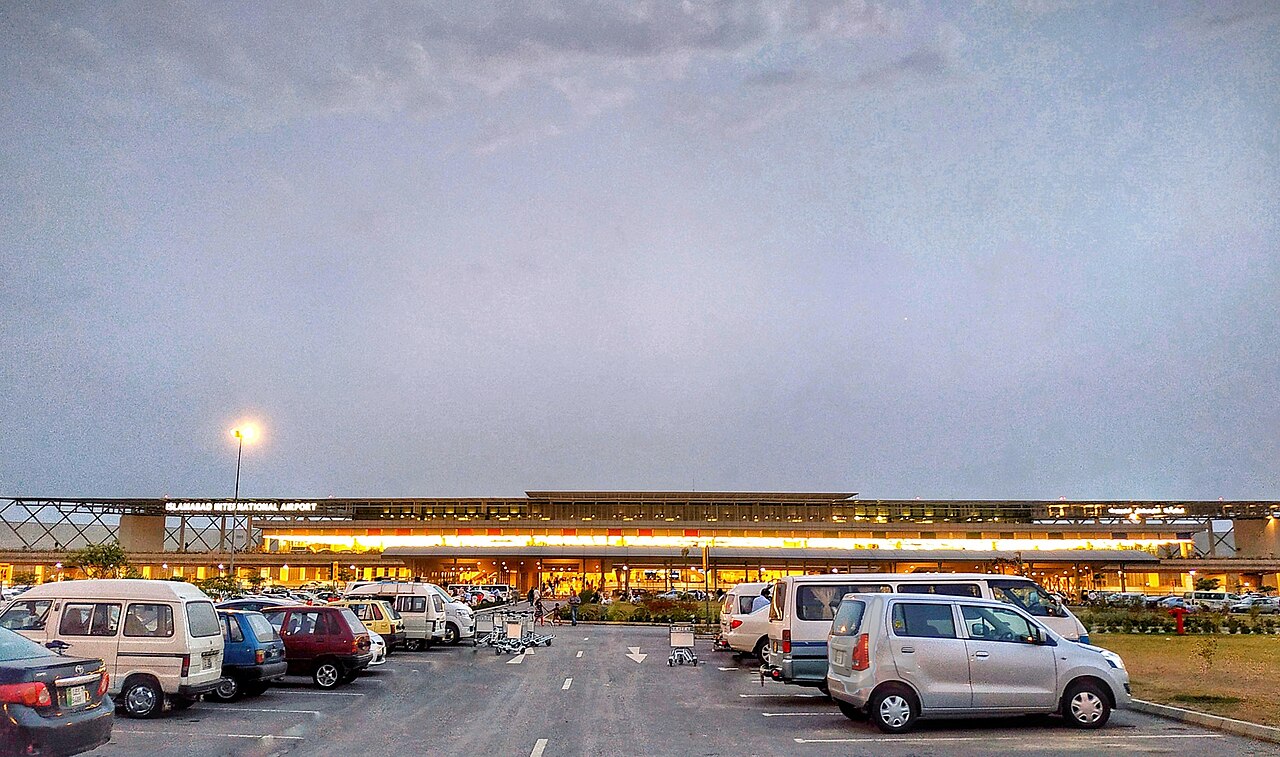
| Terminals | 1, opened in May 2018, with domestic and international flights under one roof |
| Airside transit between terminals | Not applicable, every flight uses the single terminal |
| Free wifi | Yes, but registration normally needs a Pakistani mobile number for the SMS code; foreign travelers can get login help at the information desk. Session limits to be confirmed |
| Sleep friendliness | Poor. The building stays open 24 hours, but there are no rest zones, no cots and mostly fixed armrest seating |
| Lounge count | 2 confirmed CIP lounges, one international and one domestic, both airside and open 24 hours; airline run lounges to be confirmed |
| Nearest in terminal hotel | None. The closest hotels are in Islamabad or Rawalpindi, 25 to 40 minutes away by road |
Orientation
How Islamabad International is laid out
Islamabad International opened in May 2018 near Fateh Jang, west of the twin cities, and it replaced the cramped old Benazir Bhutto airport in Rawalpindi with a single modern terminal shaped like the letter Y. Domestic and international operations share the same building, which makes connections here about as simple as Pakistan gets.
The terminal splits by direction rather than by carrier. Check in occupies the central block, then security and immigration feed two airside piers: one for international departures with the duty free run and the airside mall, one for domestic flights around the C gates. Around 25 gates serve the building, and the walk from the entrance to the farthest gate rarely takes more than 15 minutes. Signage runs in Urdu and English and the sightlines are good, so getting lost takes real effort.
One quirk hits you before the building does. Security starts at the entrance doors, where every traveler goes through a body and baggage search just to enter the terminal, and access is generally limited to ticketed passengers. Add 20 to 30 minutes to whatever arrival buffer you had planned, more during the Hajj and Umrah season when the forecourt gets busy.
Connections within the building are straightforward. Domestic to domestic on one ticket is fine at 60 to 90 minutes. International arrivals connecting onward clear immigration and customs first, then recheck, so treat 2 hours as the floor and 3 hours on separate tickets. The airport is run by the Pakistan Airports Authority, though the government has been working on outsourcing operations to a private concession since 2024; an open bidding process was announced in early 2026 and a Turkish consortium bid had already fallen short of the revenue threshold before that. Nothing about that process changes the passenger experience yet.
Getting to the city takes planning. Islamabad's Blue Area sits roughly 25 km away along the motorway link, 30 to 50 minutes by car depending on traffic, and central Rawalpindi sits a similar distance to the southeast. The official Metro Taxi counter in arrivals quotes set fares, around 3,000 rupees to central Islamabad at the time of writing. Careem ended its ride hailing service in Pakistan in 2025, so the app options are now InDrive and Yango, both of which pick up at the airport for less than the counter rate. The Orange Line metrobus links the airport with Faiz Ahmed Faiz station in Islamabad over a 25.6 km route for a token fare, and feeder buses cover nearby sectors; it is by far the cheapest way in, but it does not run overnight and current first and last departures are to be confirmed.
Inside the terminal
What the terminal gives you
Landside: short and functional
Because of the entrance search, the landside zone is a transit space rather than a place to linger. Check in counters, a banking square with ATMs and currency exchange from National Bank of Pakistan and Royal Currency Exchange, luggage wrapping for about 200 rupees a piece, and a few cafes cover the essentials. There is no landside hotel, no luggage storage and no lockers, so plan around your bags rather than with them.
International airside: the CIP lounge and the mall
Past immigration and the ASF search area, the international departure lounge holds the airside mall, the duty free shops and the main CIP lounge, upstairs next to the staircase in the departure hall. The lounge runs 24 hours and is the best seat in the building: complimentary for first and business class passengers, open to everyone else through Priority Pass or a walk in fee of about 20 US dollars per head. Priority Pass entry is allowed from 3 hours before scheduled departure, and the app also shows an Airline Lounge listing at ISB whose current status is to be confirmed, so check your app before relying on it. Food in the lounge is a light buffet rather than a feast, and there are no showers, but the seating and quiet beat the gate areas by a wide margin.
Domestic airside: the second CIP lounge
The domestic side mirrors the setup at smaller scale. A second CIP lounge sits opposite Gates C3 and C4, also open 24 hours, with walk in entry around 800 rupees for domestic passengers. Gate seating across both piers is the standard fixed armrest variety, and food outlets thin out noticeably after the late evening departure bank, so eat before midnight if your flight leaves at dawn.
The overnight reality
The building never closes, and the early morning Gulf and domestic banks mean it never fully empties either. It also never gets comfortable. There are no rest zones, no sleep pods, no cots for stranded travelers and no in terminal hotel, so an overnight here means a lounge chair if you have access, or the floor and the armrests if you do not. The 24 hour CIP lounges are the only real upgrade available inside the building. If your gap runs longer than 8 hours and you can clear immigration, a hotel in Islamabad makes more sense than a night under the terminal lights, with free mobile charging booths and drinking water stations as small consolations if you stay.
Your layover, planned
The ISB guides
Islamabad layover guide, hour by hour
What 3, 5 and 8 hours buy you at ISB, the entrance search, the 24 hour CIP lounges and getting into the city.
ISB lounges and how to get in
Both CIP lounges with locations, hours, Priority Pass access and walk in prices for international and domestic.
Sleeping at ISB
The 24 hour terminal, the fixed armrest reality, the CIP lounge chairs and the hotels in Islamabad and Rawalpindi.
Check lounge access for ISB
Both CIP lounges sell entry at the door to any traveler regardless of airline or cabin, and the international lounge takes Priority Pass. Compare current access options, prices and hours before you fly.
Check lounge accessSome links may earn us a commission at no cost to you.
FAQ
Islamabad layover questions
Can I sleep overnight at Islamabad airport?
The terminal stays open 24 hours, so you can stay, but conditions are poor. There are no rest zones, no cots and no in terminal hotel, and most seating has fixed armrests. The 24 hour CIP lounges are the most comfortable option if you have Priority Pass or pay the walk in fee; otherwise consider a hotel in Islamabad, 30 to 50 minutes away by road.
Is wifi free at Islamabad airport?
Yes, free wifi covers the terminal, but registration normally requires an access code sent by SMS to a Pakistani mobile number. Travelers without a local number can ask at an information desk for login credentials. Any session time limits are to be confirmed, so download what you need before you fly.
Which lounges does ISB have and how do I get in?
Two CIP lounges are confirmed, both open 24 hours: one airside in international departures, upstairs in the departure lounge, and one airside in domestic departures opposite Gates C3 and C4. First and business class passengers enter free, Priority Pass is accepted at the international lounge from 3 hours before departure, and walk in entry costs about 20 US dollars for international or 800 rupees for domestic passengers.
How do I get from ISB to Islamabad city?
By road or metrobus. The city center is roughly 25 km away. The official Metro Taxi counter quotes set fares around 3,000 rupees to the Blue Area, and the InDrive and Yango apps usually undercut that; Careem no longer operates in Pakistan. The Orange Line metrobus runs 25.6 km to Faiz Ahmed Faiz station for a token fare but does not run overnight.
Can I leave the airport during a layover at ISB?
Only if you can enter Pakistan. Most nationalities need a visa or an approved electronic travel authorization in advance, and airport transit without entry does not let you leave the terminal. With entry sorted, the Faisal Mosque is about 30 to 45 minutes away by car, so a city run needs 6 hours or more on the ground. Rules change and depend on your nationality; verify before travel.
Nearby
Related airports
Lahore Allama Iqbal (LHE)
Pakistan's second international gateway, about 45 minutes by air or 4 hours down the motorway. Many itineraries to Punjab route here instead of ISB.
Delhi Indira Gandhi (DEL)
The big South Asian hub across the border, useful as a comparison point when weighing one stop routings through the subcontinent.
Dubai International (DXB)
The dominant transfer hub for travelers heading between Islamabad and Europe or the Americas, about 3 hours by air with frequent Emirates and flydubai service.
Join Gate Notes
Lounge offers and the layover intel you need at 2am, in your inbox before you fly. Free.
No spam. Unsubscribe any time.