Airport Hub · HND · Tokyo, Japan
Tokyo Haneda (HND): The Complete Layover Guide
How good is it? One of the best airports in the world to be stuck in. Clean, quiet, safe, open all night in Terminal 3, and 13 minutes from the city.
Best lounge option: Sky Lounge South in Terminal 3. It runs around the clock, has showers, and takes Priority Pass at standard hours.
The one thing to know: Terminal 1 closes at midnight. If your overnight wait involves a domestic flight from T1, plan to camp in T2 or T3 and shuttle over after 5am.
Quick facts
Haneda at a glance
| Terminals | 3. T1 and T2 mostly domestic (JAL in T1, ANA in T2), T3 international |
|---|---|
| Airside transit between terminals | No. Free landside shuttle, about 7 minutes between T3 and T1 or T2 |
| Free wifi | Yes, HANEDA-FREE-WIFI, email registration, all terminals |
| Sleep friendliness | Good. T3 open 24 hours airside and landside, benches without armrests |
| Lounges | 15+, including 8 on Priority Pass across all three terminals |
| In terminal hotel | Royal Park Hotel Tokyo Haneda (T3, plus an airside transit wing), First Cabin (T1), Haneda Excel Hotel Tokyu (T2) |
Orientation
How Haneda works
Haneda is Tokyo's close airport, and it behaves like one: small distances, fast trains, and a layout you can learn in five minutes.
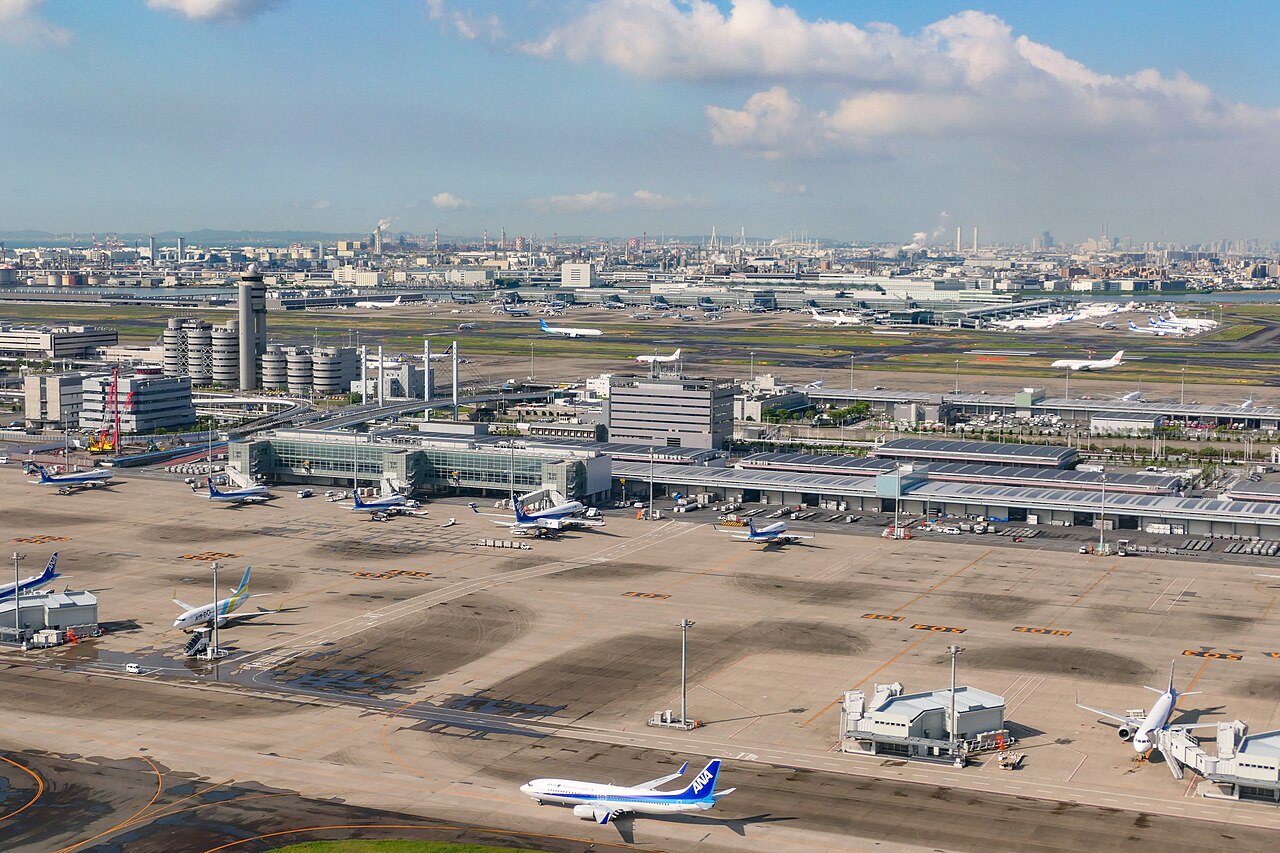
Three terminals. Terminal 1 is Japan Airlines domestic territory, Terminal 2 belongs mostly to ANA domestic with a handful of ANA international departures, and Terminal 3 handles international flights for everyone else. If you are connecting from an international arrival to a domestic flight, you will clear immigration and customs in T3 first, then ride the free shuttle. The shuttle takes about 7 minutes to T1 or T2 and runs every 4 to 6 minutes from around 5am until just before 1am. T1 and T2 are also linked by an underground walkway with travelators, a 5 to 10 minute walk near the Keikyu station level.
Security here is fast by global standards. Expect about 7 minutes off peak and 11 minutes or more during the morning rush from 5am to 8am and the evening wave from 4pm to 7pm. Arrival immigration averages about 22 minutes but climbs sharply when several long haul flights land together, which happens most mornings between 6am and 9am. The airport's own advice is to show up 3 hours before an international departure, and during Golden Week or New Year that advice is worth taking literally.
One quirk of overnighting here: security staff patrol T3 after midnight and check IDs and boarding passes of anyone sleeping airside. It is not hostile, just thorough. Keep your documents reachable and you will be left alone.
Plan your hours
Your HND layover, by goal
HND layover guide, hour by hour
Plans for 3, 5, and 8 hours and overnight at Haneda, with realistic timings for security and immigration. Includes whether a Tokyo run makes sense with your window.
Every lounge at Haneda
All HND lounges with terminals, hours, and access rules, from the JAL First Class Lounge to the Power Lounges. Which doors open with Priority Pass and which need a business class ticket.
Sleeping at Haneda
Where people actually sleep in T2 and T3, plus First Cabin capsules and the Royal Park transit hotel inside security. The honest word on benches versus paying for a bed.
Leaving the airport
Tokyo in a few hours
This is the headline reason to route through Haneda instead of Narita. The Keikyu Line reaches Shinagawa in about 11 minutes for roughly 327 yen with an IC card, and the Tokyo Monorail reaches Hamamatsucho in about 13 minutes for 490 yen. Both stations sit on the Yamanote Line loop, so Shibuya, Shinjuku, and Tokyo Station are each another 5 to 20 minutes away. Door to door, plan 40 to 60 minutes to most central neighborhoods.
A city run starts to make sense at 4 to 5 hours of layover, and gets comfortable at 6 or more. Many nationalities can enter Japan without a visa, but not all, and airside transit without entering Japan is also possible on most itineraries. Verify before travel, since rules depend on your passport and change without much notice.
Comfort
Lounges and rest, the short version
The lounge spread rewards a little homework. In Terminal 3, the TIAT Lounge on the fourth floor runs 24 hours with showers and a buffet, and sells walk in entry at 4,400 yen; Priority Pass opens its door only between 1am and 5am. Sky Lounge South one floor below also runs around the clock with showers and takes Priority Pass at normal hours, which makes it the default play for most cardholders. The Centurion Lounge serves eligible American Express cards from 8am to 10pm, the Delta Sky Club runs 7:30am to 11pm with walk in entry at 79 dollars on a same day Delta ticket, and the JAL First Class Lounge near gate 112 stays the preserve of oneworld Emeralds and first class passengers. Over in the domestic terminals, the Power Lounges in T1 and T2 all take Priority Pass.
For actual sleep, Haneda gives you three in terminal hotels and they fill up. First Cabin in T1 sells capsule style cabins from 800 yen for the smaller class and 1,000 yen for the larger, open around the clock. The Haneda Excel Hotel Tokyu in T2 offers day rooms in 3, 6, or 8 hour blocks. The Royal Park Hotel in T3 runs both a landside hotel with refresh rooms from 3,000 yen for the first hour and a transit wing inside the secure zone, the single most useful bed at this airport for a short international connection. Free benches without armrests exist in T2 and T3, but T3 floors are stone, so claim a bench rather than planning on the floor. The full map lives in our guide to sleeping at Haneda (HND).
FAQ
Haneda layover questions
Can I sleep overnight at Haneda Airport?
Yes, in Terminal 3, which stays open around the clock both landside and airside. Terminal 2 also stays open, but Terminal 1 closes at midnight and reopens at 5am. Guards check boarding passes overnight, so keep yours handy.
Does Priority Pass work at Haneda?
Yes. Sky Lounge South in Terminal 3 takes Priority Pass at standard hours, and the Power Lounges in Terminals 1 and 2 take it too. The TIAT Lounge in Terminal 3 accepts Priority Pass only between 1am and 5am. Check the app before you walk over.
Which train is faster to central Tokyo from HND?
The Keikyu Line reaches Shinagawa in about 11 minutes for roughly 327 yen with an IC card. The Tokyo Monorail takes about 13 minutes to Hamamatsucho for 490 yen. Both connect to the Yamanote Line, so pick whichever station suits your plan.
Can I move between Terminal 3 and Terminals 1 or 2 without leaving security?
No, not for most passengers. International to domestic connections mean clearing immigration and customs, then riding the free landside shuttle, which takes about 7 minutes and runs roughly every 4 to 6 minutes from 5am to just before 1am.
How early should I arrive for an international flight from Haneda?
Three hours before departure is the airport's own advice. Security averages about 7 minutes off peak but stretches past 11 minutes between 5am and 8am and again from 4pm to 7pm. Add 30 minutes during Golden Week, Obon, and New Year.
Check lounge access at HND
Compare entry options for Haneda's lounges, from Priority Pass to walk in rates, before you commit to a long wait at the gate.
Affiliate disclosure: some links may earn us a commission at no cost to you.
Nearby
Related airports
Tokyo Narita (NRT)
Tokyo's other international airport, where many long haul arrivals land instead of Haneda.
Nagoya Chubu Centrair (NGO)
The central Japan gateway, a common alternative for domestic and regional connections.
Osaka Kansai (KIX)
Western Japan's main international hub, often the backup when Tokyo routings fall through.
Join Gate Notes
Lounge offers and the layover intel you need at 2am, in your inbox before you fly. Free.
No spam. Unsubscribe any time.