Airport hub guide
Fukuoka Airport FUK: the complete layover guide
Two terminals on opposite sides of one runway, a subway that puts you in the city in 5 minutes, and a hard closing time every night. Here is how to play a layover at Fukuoka.
Layover verdict Excellent for daytime layovers of 3 to 6 hours because central Fukuoka is a 5 minute subway ride away, useless for overnights because the terminals shut once the last flights leave.
Best lounge play Lounge Fukuoka on the 4th floor of the international terminal takes Priority Pass and was named APAC Lounge of the Year in the Priority Pass Excellence Awards 2026. Arrive hungry.
The one thing to know The domestic and international terminals face each other across the runway and the free shuttle between them runs landside. Treat any transfer that switches buildings as a 60 to 90 minute job.
Last reviewed 17 May 2026
Quick facts
Fukuoka at a glance
| Terminals | 2 (Domestic and International, on opposite sides of the single runway) |
| Transit between terminals | Free shuttle bus from the 1F stops, about 10 minutes, landside only |
| Free wifi | Yes, unlimited on the AirportFreeWiFi network, no registration needed |
| Sleep friendliness | Poor. The terminals close overnight, roughly 22:30 to 06:00 |
| Lounge count | 8 across both terminals: airline, credit card and Priority Pass options |
| Nearest hotel | None inside the terminals; Stay Airport is a short walk from the domestic side, Hakata hotels are 5 minutes by subway |
Orientation
How Fukuoka Airport is laid out
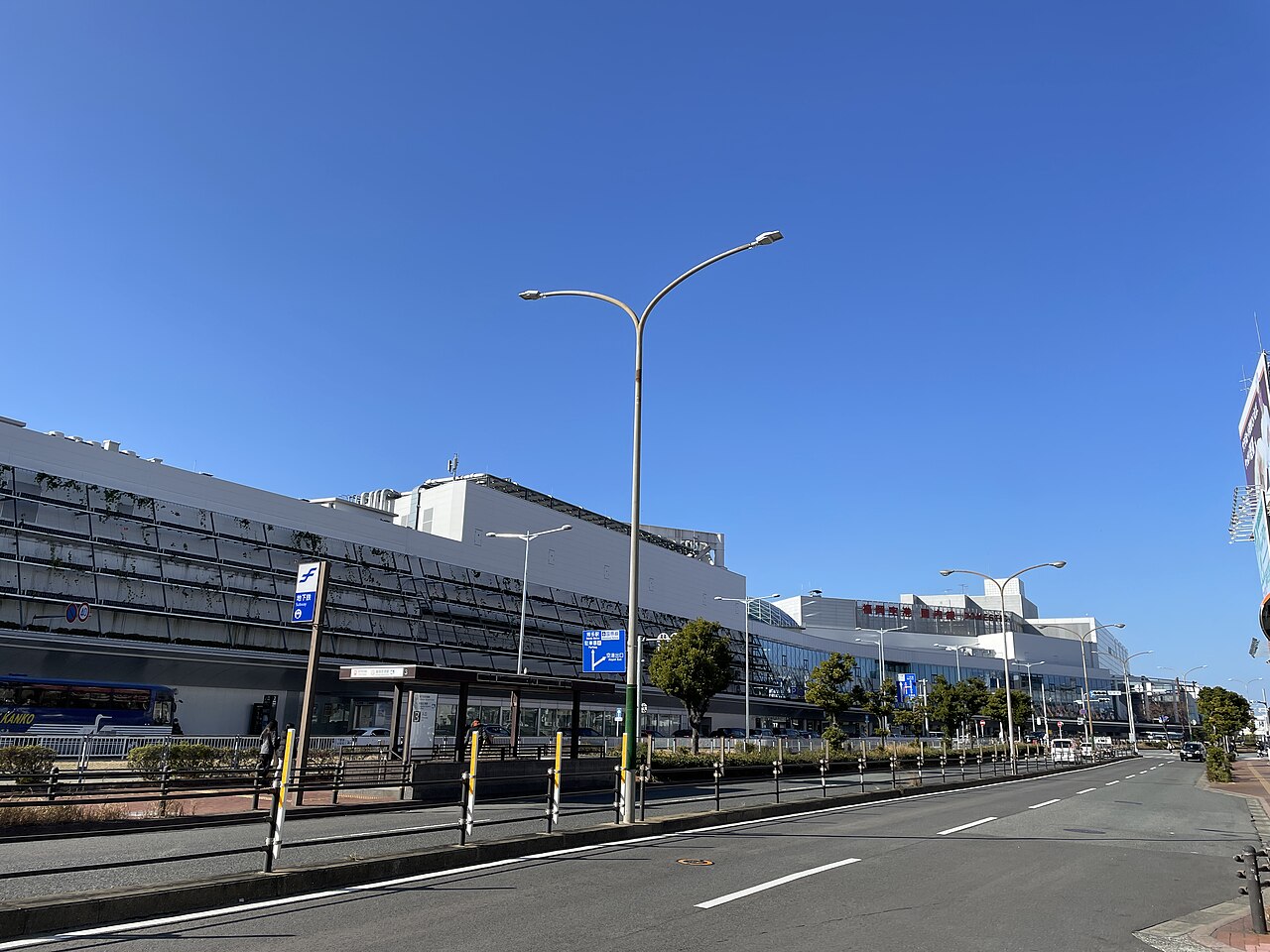
Fukuoka is the rare major airport that sits inside its own city. The domestic terminal has a subway station built into it, and Hakata Station is two stops and 5 minutes away. No other Japanese gateway gets you downtown faster.
The field itself is simple: one runway, two passenger buildings. The domestic terminal stands on the east side, a long building handling every domestic carrier, with ANA roughly at the north end and JAL toward the south. The international terminal sits alone on the west side of the runway and handles every international flight. It finished a major expansion and renovation in December 2025, so if your memories of FUK international are of a cramped building, those memories are out of date.
Moving between the two means a free shuttle bus from the 1F stops outside each building. The ride takes about 10 minutes because the bus has to loop around the southern end of the airfield, and it can take longer in traffic. There is no airside connection of any kind, so an international arrival connecting to a domestic flight clears immigration and customs first, rides the bus, then checks in and goes through security again on the domestic side.
City access is the headline act. The Fukuoka City Subway Kuko Line starts beneath the domestic terminal, connected by escalator on the south side of the building, and reaches Hakata in 5 minutes and Tenjin in 11 for 260 yen. Trains run every few minutes through the day. From the international terminal you either ride the shuttle to the domestic side for the subway or take one of the direct city buses from the forecourt.
Now the catch. Fukuoka keeps a strict night curfew on its single runway, so the schedule dies in the late evening with the last flights around 22:00, and the terminal buildings close soon after, reopening around 06:00. There is no overnight camping here, no quiet corner to ride out a 2am arrival gap. If your itinerary strands you in Fukuoka overnight, you are sleeping in a hotel whether you planned to or not. The good news is that Hakata has hundreds of them at every price, 5 minutes away.
Terminal by terminal
What each terminal gives you
Domestic Terminal
The busy side. Every domestic flight in Japan touches down here, and the building runs on commuter rhythm: fast security, fast turnarounds, a subway station in the basement. For lounge access there are two Lounge TIME locations, North before security and South after security, both open 06:00 to 21:00 daily. They are credit card lounges first, but anyone can pay cash or card at the door for entry, which makes them the most democratic seats in the building. Airline flyers get more: the ANA Lounge serves ANA premium passengers and status holders, while JAL runs both a Sakura Lounge and a Diamond Premier Lounge on the 2F inside the departure area, open from 06:00 until the last flight. The food situation upstairs is genuinely good, including a floor of ramen shops gathered from across Japan, a reasonable reward for an hour to kill.
International Terminal
Smaller, calmer, and freshly rebuilt, with expansion work completed on 20 December 2025 and a new run of shops and restaurants in the 3F departures area. The lounge bench here punches far above the terminal size. Lounge Fukuoka on the 4F is the star: 216 seats, runway views, a buffet built around local food, and entry for business class passengers on designated airlines as well as Priority Pass holders. It opens when immigration opens and runs to final boarding. Priority Pass also gets you into the KAL Lounge run by Korean Air on the 3F near Gate 56, though watch its split hours, 08:00 to 15:00 and 18:30 to 21:00. The third option is Lounge TIME International, also on the 3F near Gate 56, a 70 seat credit card lounge that sells entry to anyone and stays open until 21:00. All three sit after immigration, so they are for departing international passengers only.
Moving between the terminals
The free shuttle is reliable but it is a road journey, not a corridor. Buses leave from the 1F of each building and take about 10 minutes terminal to terminal, longer when Fukuoka traffic is having a day. Add immigration on arrival, the wait for the bus, and a fresh security queue on the other side, and a domestic to international switch becomes a 60 to 90 minute exercise. On a single ticket with checked through bags, 90 minutes is a sensible floor. On separate tickets, give yourself 2.5 hours minimum, because you are starting from zero at the second check in desk. Both Lounge TIME operations also run paid nap rooms and showers in the buildings; current rates and hours are to be confirmed on the airport site.
Check lounge access for FUK
Eight lounges operate across Fukuoka Airport and several sell entry to any traveler regardless of airline or cabin. Compare current access options, prices and hours before you fly.
Check lounge accessSome links may earn us a commission at no cost to you.
FAQ
Fukuoka layover questions
Can I sleep overnight at Fukuoka Airport?
No. The terminals close overnight after the last flights, which leave around 22:00 because of the runway curfew, and reopen around 06:00. Book a hotel instead: Stay Airport is a short walk from the domestic terminal and Hakata hotels are 5 minutes away by subway.
How do I transfer between the terminals at FUK?
Take the free shuttle bus from the 1F stops outside each building; the ride takes about 10 minutes, longer in traffic. The shuttle runs landside only, so connecting passengers clear arrival formalities first and go through security again at the other terminal.
Is wifi free at Fukuoka Airport?
Yes. Both terminals offer free unlimited wifi on the AirportFreeWiFi network with no registration required. Coverage reaches most areas of both buildings.
How much connection time do I need at Fukuoka Airport?
Within the domestic terminal, 60 minutes is comfortable. Any connection between the international and domestic terminals involves the landside shuttle plus a new security check, so plan 90 minutes on a single ticket and 2.5 hours or more on separate tickets.
Can I leave the airport during a layover at FUK?
Yes, if you meet Japan entry requirements, and you should: the subway reaches Hakata in 5 minutes and Tenjin in 11 for 260 yen. Entry rules depend on your nationality; verify before travel.
Which terminal do international flights use at Fukuoka Airport?
All international flights use the International Terminal on the west side of the runway, and all domestic flights use the Domestic Terminal on the east side. The international building was expanded and renovated, with work completed in December 2025.
Guides
Fukuoka deep dives
FUK layover guide
What 3, 5 and 8 hours buy you at Fukuoka, and when the 5 minute subway into Hakata is worth it.
FUK lounges
Every lounge across both terminals with locations, hours and access methods.
Sleeping at FUK
Why the terminals close overnight and where to find a bed near Hakata, 5 minutes away.
Nearby
Related airports
Osaka Kansai (KIX)
The major international gateway for western Japan, built on an artificial island in Osaka Bay. A common transfer point for itineraries that route through Kyushu.
Okinawa Naha (OKA)
The hub for Japan's southern islands, about 90 minutes from Fukuoka by air. Heavy domestic traffic and a growing list of Asian international routes.
Seoul Incheon (ICN)
The closest major foreign hub, under 90 minutes from FUK. Busan is nearer to Fukuoka than Tokyo is, and the Korea routes are among the busiest at the airport.
Join Gate Notes
Lounge offers and the layover intel you need at 2am, in your inbox before you fly. Free.
No spam. Unsubscribe any time.