Airport hub · FCO · Last reviewed 6 May 2026
Rome Fiumicino (FCO): The Complete Layover Guide
Italy's biggest hub is a five star Skytrax airport with real food, a manageable layout, and a 32 minute train into one of the great cities on earth.
- Layover verdict
- One of Europe's better places to be stuck: Skytrax named it best airport in southern Europe for 2026, the airside food is genuinely good, and connections work if you respect the passport queues.
- Best lounge option
- Plaza Premium in Terminal 3, upper level near gates E1 to E8: Priority Pass access, showers, and room for 300 guests.
- The one thing to know
- The SkyBridge people mover to satellite gates E31 to E44 runs one way only, and there are no lounges and almost no food once you cross.
Quick facts
Rome Fiumicino at a glance
| Terminals | Two in use: T1 (boarding area A, mostly Schengen) and T3 (boarding area E, non Schengen and long haul). T2 was demolished in 2017. |
|---|---|
| Airside transit between terminals | Yes. A covered airside walkway links T1 and T3 in 8 to 10 minutes. The E31 to E44 satellite is one way only. |
| Free wifi | Yes, free and unlimited on the Airport Free WiFi network, no registration needed. |
| Sleep friendliness | Open around the clock, but armrests on most seating. Doable, not restful. |
| Lounge count | 12 lounges across both terminals, 6 of them on Priority Pass. |
| Nearest in terminal hotel | Hilton Rome Airport, landside, covered walkway, about 10 minutes on foot. No airside hotel. |
Orientation
How FCO fits together, and how much time the layout steals
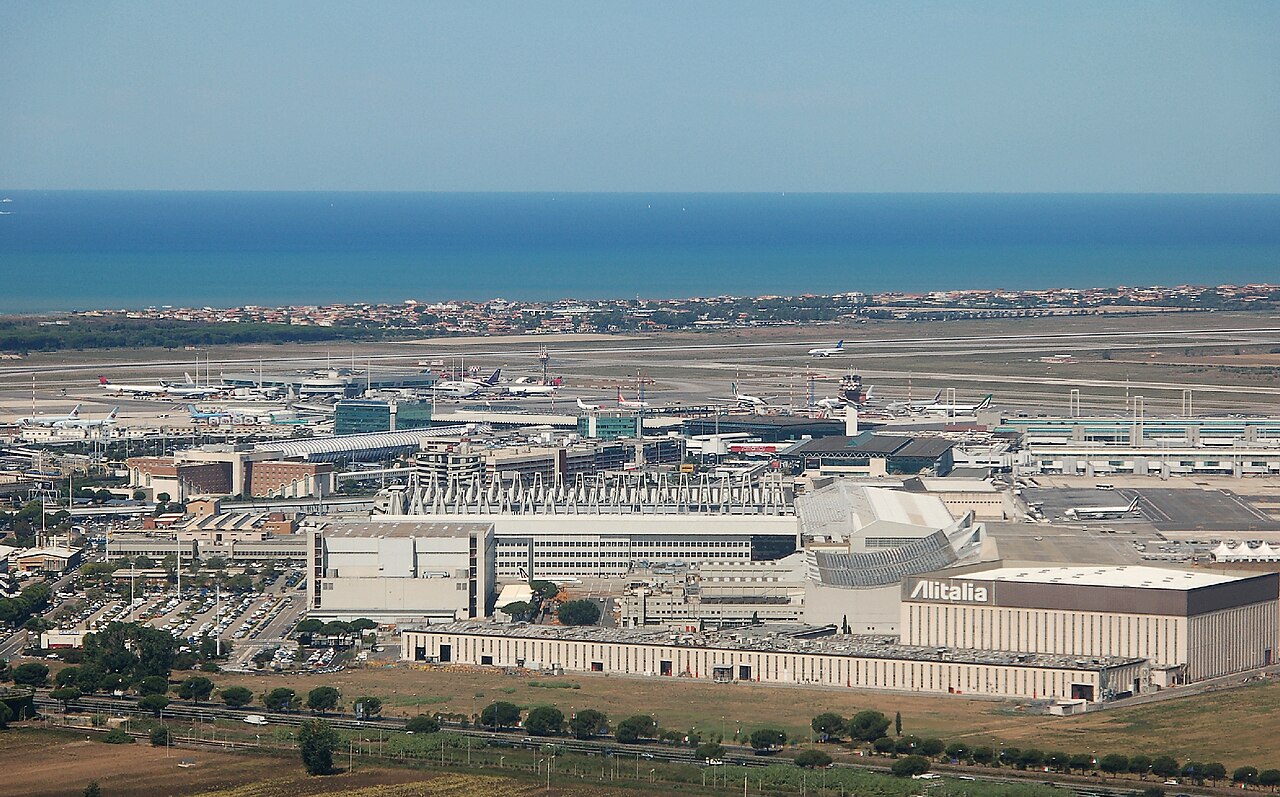

Fiumicino has two working terminals, and the numbering trips people up. Terminal 1 and Terminal 3 are it. Terminal 2 was demolished in 2017 so T1 could expand, and Terminal 5, the old dedicated building for flights to the United States and Israel, closed the same year and never came back. Some booking confirmations and old maps still mention both. Ignore them. The number on your ticket only tells you where to check in; once you clear security, the boarding area is what runs your life. T1 feeds boarding area A, gates A1 to A83. T3 feeds boarding area E, gates E1 to E61.
The split follows the Schengen border. T1 and boarding area A handle ITA Airways, which hubs here, plus most Schengen and domestic traffic. T3 and boarding area E take the non Schengen flying: the United States, the United Kingdom, the Gulf, Asia. Boarding area E itself divides in two. Gates E1 to E30 are in the main T3 building with the shops, the restaurants and every T3 lounge. Gates E31 to E44 sit in a separate satellite reached only by the SkyBridge, an automated people mover that runs in one direction. Most transatlantic departures use the satellite, which has no lounges and very little food. Eat first, lounge first, then ride.
Transfers between the terminals are easier than at most split hubs. Landside, the walk takes about five minutes under cover. Airside, a walkway connects T1 and T3 without leaving the secure zone: 8 to 10 minutes between the closest points, 20 to 25 between far gates. The official minimum connection time is 40 minutes, which assumes everything goes right, and nothing ever does. Plan 60 minutes for Schengen to Schengen on one ticket, 90 or more for anything that crosses the passport border, and at least three hours if you booked two separate tickets, because then you must collect bags, recheck them and clear security from scratch.
Security itself is rarely the problem. On a normal day it takes 10 to 25 minutes, stretching to 35 to 50 in summer peaks, and FastTrack costs 10 euros if you want insurance. Passport control is the real variable. When several long haul flights land in the same hour, queues run 30 to 45 minutes or longer. The EU Entry Exit System went live at FCO on 12 October 2025, replacing passport stamps with biometric registration for non EU visitors, so first timers should budget extra for the kiosks. The airport runs 77 automated passport gates, activated in summer 2025, which process eligible passports in about 20 seconds each.
Nights are quiet but survivable. The terminals stay open around the clock, so a late arrival or a brutal early connection will not leave you on the curb. The catch is that nearly everything closes: lounges are shut by about 23:00, most shops and restaurants follow, and the last Leonardo Express leaves for Rome at roughly 23:20, so check the current timetable before counting on it. Overnight airside access is limited to ticketed passengers, and most seating carries armrests. The HelloSky Air Rooms near T3 arrivals rent beds by the hour when benches lose their appeal.
What surprises people most is that FCO is now genuinely good. Skytrax rates it five stars, ranked it seventh best airport in the world for 2026 and named it best in southern Europe, and ACI has called it best in Europe for service quality nine years running as of 2025. The Eataly on the boarding area A mezzanine is the largest in any airport anywhere. The Leonardo Express covers the run to Termini in 32 minutes, every 15 minutes, for 14 euros. The flip side: the airport passed 50 million passengers in 2025, ITA's move to Star Alliance has left lounge access rules in flux, and the satellite remains a one way trap. Respect the layout and FCO treats you well.
Plan the hours
Your FCO layover, piece by piece
This page gives you the shape of the place. The five guides below go deep on the hours you will actually spend here.
FAQ
Rome Fiumicino layover questions
Is 90 minutes enough to connect at FCO?
On one ticket, yes for most connections: the airside walkway links T1 and T3 in about 10 minutes and the official minimum connection time is just 40 minutes. If you cross the Schengen border in either direction, 90 minutes is the sensible floor, because passport queues can run 30 to 45 minutes at peak. On two separate tickets, give yourself at least three hours.
Can you sleep overnight at Fiumicino airport?
Yes. The terminals stay open all night, though airside access overnight is limited to passengers with a boarding pass and most seating has armrests. The HelloSky Air Rooms near T3 arrivals rent private rooms by the hour, and the Hilton Rome Airport sits a covered ten minute walk from the terminals.
Can you go into Rome on a layover, and how long do you need?
The Leonardo Express reaches Termini in 32 minutes for 14 euros, so the city is closer than at most major hubs. Plan on six hours minimum between flights: anything less buys you stress, not sightseeing. You will need to clear immigration and meet Italy's entry requirements, so verify before travel.
Which FCO lounges take Priority Pass?
Six of the twelve: Plaza Premium, Prima Vista, Prima Vista Domus and Primeclass in T1's Schengen area, plus Plaza Premium and Prima Vista Portus in T3's non Schengen area. The T3 Plaza Premium near gates E1 to E8 is the standout, with showers and space for 300 guests. None of them sit in the E31 to E44 satellite.
How do you transfer between Terminal 1 and Terminal 3 at FCO?
Landside, it is a covered walk of about five minutes. Airside, a connector links the two terminals in 8 to 10 minutes without leaving the secure area, so Schengen to Schengen connections need no new security check. Only the far gates push the walk past 20 minutes.
Check lounge access at FCO
Twelve lounges, two terminals and a passport border between them make access rules at FCO messier than they should be. The directory below lists every door and every way through it.
Some links may earn us a commission at no cost to you.
Nearby
Related airports
Join Gate Notes
Lounge offers and the layover intel you need at 2am, in your inbox before you fly. Free.
No spam. Unsubscribe any time.