Layover guide · UIO · Last reviewed 27 June 2026
Layover in Quito Mariscal Sucre UIO: what to do hour by hour
One terminal that never closes, a 24 hour international lounge that has won awards, and thin air at 2,400 meters. Quito is an easy place to wait, as long as you respect the distance to the city and the altitude.
- Layover verdict
- Easy for almost any length. The single terminal stays open around the clock, the Sala VIP Internacional never closes, and walks between gates run 10 to 15 minutes at most. The weak spot is the city, which sits 45 to 60 minutes away by road, so leaving the airport only pays off with 7 hours or more.
- Best move
- If you are airside in international departures, the Sala VIP Internacional opposite duty free runs 24 hours with showers, sleeping areas and a terrace, and takes Priority Pass or about 40 dollars at the door. Landside, the Layover Stay lounge on the second floor of the Quito Airport Center also runs around the clock.
- The one thing to know
- The airport sits at roughly 2,400 meters and the city is higher at about 2,850. Arriving from sea level, you will feel it on stairs and long walks, so drink water and go easy on alcohol. Most nationalities transit visa free, but 45 listed nationalities now need a paid online transit visa. Verify before travel.
First, orient yourself
The 10 minute version of UIO
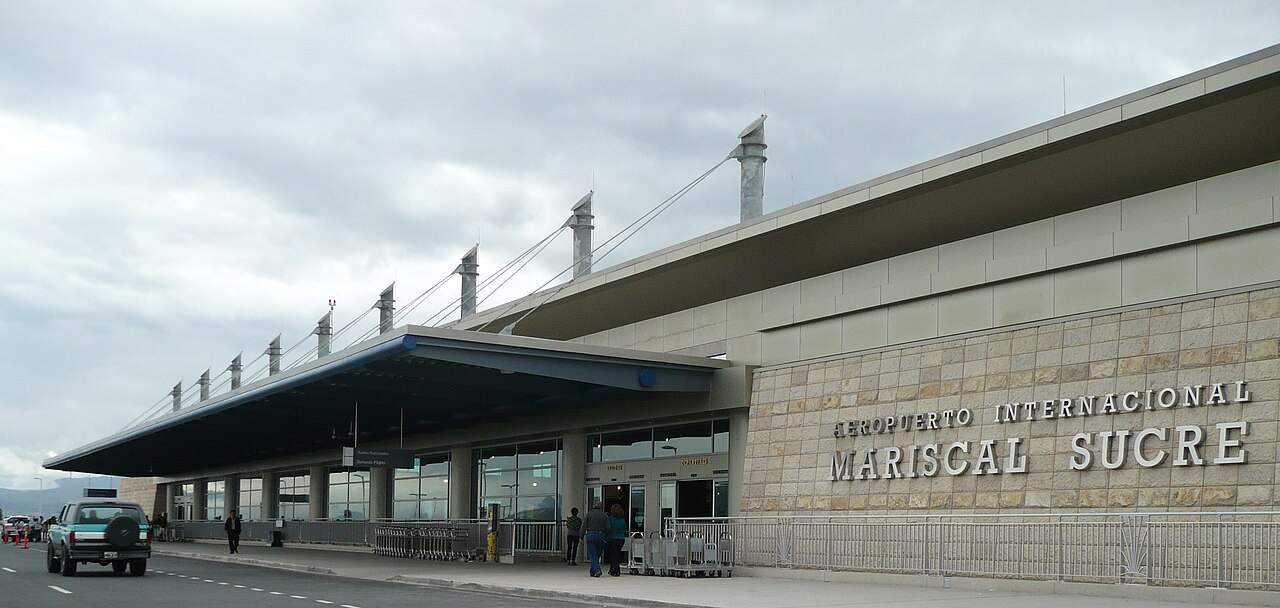
Quito works from a single terminal that opened in February 2013 on the Tababela plateau, east of the city. Check in spreads across the departures level, then security splits into domestic and international channels. International passengers clear passport control and reach the boarding level, where duty free and the Sala VIP Internacional face each other and the gates run along one concourse. Domestic gates sit in their own section past the domestic checkpoint, so the building is compact and hard to get lost in.
Connections are calm by big hub standards. Domestic to domestic on one ticket is relaxed at 60 to 90 minutes. Arriving from abroad and connecting to a domestic flight means immigration, bag claim, customs and a recheck, so treat 2 hours as the floor and 3 hours on separate tickets. International to international transfers can usually stay airside, though it pays to confirm with your airline because not every itinerary is tagged through.
Free wifi runs on the official airport network throughout the terminal, with charging at the gates. The building stays open 24 hours, landside and airside, and nobody gets pushed out overnight, but most public seating is metal with fixed armrests and the food options shrink to a skeleton crew in the small hours.
The distance to the city is the thing that shapes a Quito layover. There is no rail link, the road run to central Quito takes 45 to 60 minutes in normal traffic, and the airport sits roughly 40 km from the city by road. That math is why a short layover is best spent in the terminal, and why you want real time before any city run.
Hour by hour
What your layover actually buys you
3 hours
Connect cleanly and use the terminal
Three hours is comfortable for most connections at UIO. Domestic to domestic on one ticket is relaxed, and even an international arrival into a domestic departure fits if your bags are checked through, since 2 hours is the working floor. Spend the slack at a lounge in your area rather than the gate, because the metal seating is not built for waiting.
If you are airside in international departures, the Sala VIP Internacional is right opposite duty free and runs 24 hours. Landside, before security, the Layover Stay lounge on the second floor of the Quito Airport Center is the equivalent.
5 hours
A lounge, a shower and a real meal
Five hours is the sweet spot to settle in airside. The Sala VIP Internacional has hot food, showers, dedicated sleeping areas, a massage room and an open air terrace looking at the Andes, and Priority Pass named it a global Airport Lounge of the Year. Entry comes through Priority Pass, LoungeKey or Diners Club, or about 40 dollars at the door, with pricing to confirm at the desk.
Without lounge access, the international concourse carries cafes and restaurants that stay busy until the late departure bank, then thin out. The domestic side has the renovated Sala VIP Domestica, which Priority Pass listings show opening around 4am and closing around 10pm with a 3 hour cap.
8 hours
A city run is possible, but tight
With 8 hours and the right documents, central Quito is reachable, though the distance makes it a committed trip rather than a casual one. The official airport taxi cooperative waits outside arrivals around the clock, the run to La Mariscal or the historic center costs roughly 25 to 35 US dollars in daylight, and the ride takes 45 to 60 minutes when traffic behaves. App based rides such as Uber and 99 operate in Quito as well.
To leave you must clear Ecuadorian immigration and hold valid entry documents, then return for a second screening, so budget being back about 3 hours before departure. The altitude is the other factor: the old town sits near 2,850 meters, so pace yourself. Verify before travel.
Overnight
The terminal stays open, but plan a real rest
Quito does not throw you out at midnight. The terminal runs 24 hours and security follows the flight schedule, but the floor is unfriendly, with metal armrests and a building that cools down at night. The realistic ladder is the Layover Stay lounge landside, open around the clock with reclining seats and showers, the Sala VIP Internacional if you are airside with access, or a bed at the Wyndham Quito Airport, about 1 km away with a free shuttle every half hour.
The altitude tends to wreck sleep for travelers arriving from sea level, so a flat surface and a quiet room help more here than at most airports. If a bench is your only plan, claim a lounge style seat early.
City escape
Leaving the airport: the honest math
| Question | Answer |
|---|---|
| Is leaving realistic | From about 7 hours, because the city is 45 to 60 minutes away each way by road |
| Document to leave | Clear Ecuadorian immigration with valid entry documents; most nationalities are visa free for short stays, 45 listed nationalities need a paid online transit visa. Verify before travel |
| Transport | No rail link; official airport taxi from arrivals, or Uber and 99 ride apps |
| Taxi time and fare | 45 to 60 minutes to central Quito, roughly 25 to 35 US dollars in daylight, more at night |
| Public buses | Connect the airport with the Rio Coca, Quitumbe and Carcelen terminals for a couple of dollars, but slow and awkward with luggage |
| Be back at the airport | About 3 hours before departure, allowing for traffic and rescreening |
The distance is what eats the time. A round trip by taxi is two hours of road before you account for traffic, so a 7 hour layover gives you maybe three hours in the city once you subtract the rescreening buffer. With less than that, the terminal and a lounge are the smarter use of the gap. If you do go, the historic center is the payoff, a dense colonial old town that rewards even a short walk, but go in slowly because of the altitude.
Check lounge access for UIO
All three Quito lounges sell entry or take a lounge program regardless of airline or cabin. See the full door list with hours, access methods and current prices.
Check lounge accessSome links may earn us a commission at no cost to you.
FAQ
Quito layover questions
Do I need a visa to connect through Quito?
Most nationalities transit Ecuador without a visa, subject to airline and immigration checks. Since 31 July 2025 a list of 45 nationalities, including China, India, Cuba, Venezuela, Iran, Afghanistan and many African countries, must hold a paid online transit visa applied for in advance, even when staying airside. Check your nationality and verify before travel.
How long do I need for a connection at UIO?
Domestic to domestic on one ticket is relaxed at 60 to 90 minutes. An international arrival connecting to a domestic flight needs at least 2 hours for immigration, bags, customs and a recheck, and 3 hours on separate tickets. International to international can usually stay airside, but confirm with your airline that bags are tagged through.
Is there a lounge open all night at Quito airport?
Yes, two. The Sala VIP Internacional sits airside in international departures and runs 24 hours with showers and sleeping areas, and the Layover Stay lounge operates landside on the second floor of the Quito Airport Center around the clock. Both appear in the Priority Pass network. The Sala VIP Domestica keeps shorter hours.
Is it worth leaving the airport on a Quito layover?
Only with about 7 hours or more, because central Quito is 45 to 60 minutes away by road and there is no train. A taxi costs roughly 25 to 35 US dollars each way in daylight. You must clear Ecuadorian immigration to leave and return for a second screening, so build in a buffer and verify entry rules before travel.
Will the altitude affect my layover at Quito?
It can. The airport sits at about 2,400 meters and the city is higher at around 2,850, so travelers from sea level often feel short of breath or get a mild headache. Take stairs slowly, drink plenty of water, and limit alcohol during your connection, especially before an onward flight.
Is the wifi free at Quito airport?
Yes. The airport provides free wifi on its official network across the terminal, with charging points at the gates. Speeds are generally fine for messaging, browsing and calls in the gate areas.
Keep planning
More UIO guides and nearby airports
Join Gate Notes
Lounge offers and the layover intel you need at 2am, in your inbox before you fly. Free.
No spam. Unsubscribe any time.