Layover guide · NGO · Last reviewed 27 June 2026
Layover in Nagoya Chubu Centrair NGO: what to do hour by hour
One compact main terminal, a fourth floor with a hot bath that faces the runway, lounges that take Priority Pass, and a 28 minute train into Nagoya. Centrair pays back a layover better than most airports its size, and the overnight here is a plan rather than a punishment.
- Layover verdict
- One of the best layover airports in Japan for 3 to 8 hours. Terminal 1 is small enough to cross in minutes, the fourth floor Sky Town gives you real Nagoya food, an open air deck and a bath overlooking the airfield, and the in terminal capsule hotel makes a night here genuinely comfortable. The one weak spot is Terminal 2, the budget annex, which has no lounges and no airside link to Terminal 1.
- Best move
- Do your eating, resting and bathing on the fourth floor of Terminal 1 before you go anywhere near a gate. With 6 hours or more and the right passport, Nagoya is 28 minutes away by fast train, and the pottery town of Tokoname is closer still for a shorter run.
- The one thing to know
- There is no airside connection between Terminal 1 and Terminal 2. A transfer between them means leaving security, walking 500 meters or taking a free shuttle, and clearing screening again. If your onward flight is a low cost carrier from Terminal 2, finish everything in Terminal 1 first. Japanese entry rules depend on your nationality, so verify before travel.
First, orient yourself
The 10 minute version of NGO
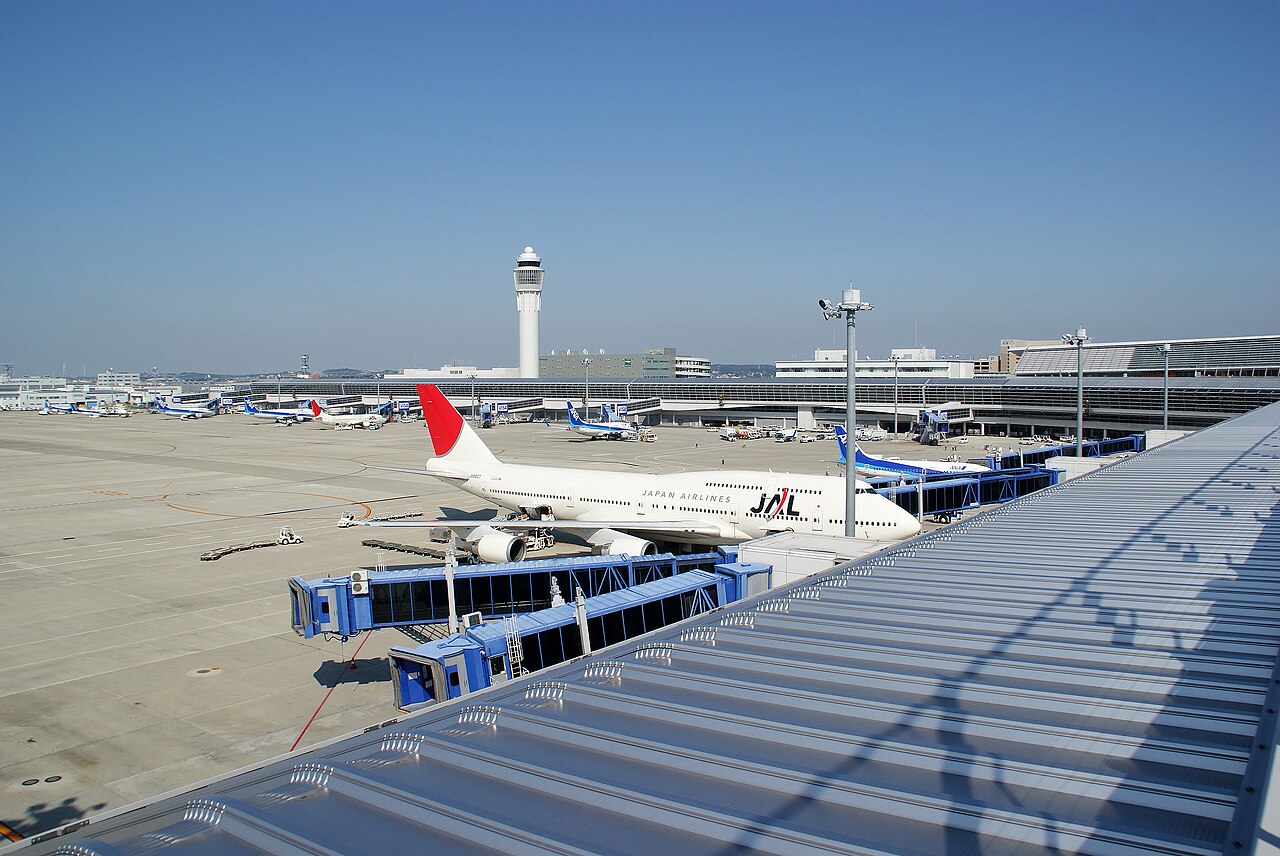
Centrair sits on a manmade island in Ise Bay off Tokoname, about 35 km south of Nagoya. For almost every purpose the airport is Terminal 1, a compact T shaped building that holds every full service airline, domestic and international. Check in is on the third floor, arrivals come out on the second, and the gates run down two arms, domestic on one side and international on the other. The longest walk from security to a gate is roughly 300 meters, so connections inside Terminal 1 are short by big hub standards.
The fourth floor is the reason to like this airport. Sky Town is a dining and shopping street with the best public food in Japanese aviation, plus the Sky Deck and the runway view bath. All of it is landside, before security, so it works on arrival or during a long gap rather than once you are through to the gates.
Free unlimited wifi runs on the official Centrair network with solid coverage through Terminal 1, and charging points sit around the gate areas. Terminal 1 stays open overnight, which matters because the fourth floor shops and the bath close in the evening and the in terminal capsule hotel becomes the sensible overnight.
Terminal 2 is the budget building, opened in 2019, a 500 meter walk to the north. Low cost carriers use it, it has no lounges, and there is no airside link to Terminal 1. A transfer between the two means exiting, walking the corridor or riding a free shuttle, and clearing security again, so treat a terminal change as a real step rather than a stroll.
Hour by hour
What your layover actually buys you
3 hours
Bath, a bowl of kishimen, and back
Three hours within Terminal 1 is comfortable. If you are arriving and have cleared into the public area, head straight to the fourth floor: a wash in the SOLA SPA Fu no Yu bath house, 1,500 yen for adults, then miso katsu or kishimen noodles on Sky Town, then a slow walk down the Sky Deck. If you are staying airside between two international flights, pick a lounge in your departure area instead and use it for food and a shower.
Connecting from an international arrival to a domestic departure is the case that eats time, because you clear immigration, collect bags, pass customs and recheck. Give that move 90 minutes or more even when the airport feels quiet.
5 hours
A lounge, the deck, and the spa
Five hours is the sweet spot to stay at the airport and enjoy it. Airside in international, the JAL Sakura Lounge is the largest and is known for its Nagoya dishes, and Priority Pass currently opens the Plaza Premium Lounge near Gate 18 and the two Coral Finest rooms near Gate 19, plus credits at a restaurant and a spa. Coverage shifts, so check the app before you fly.
If you would rather spend the time landside, the fourth floor carries five hours easily. The Sky Deck is a 300 meter boardwalk pointing at the runway, open 7:00 to 21:30 and free, and the bath faces the airfield through floor to ceiling glass.
8 hours
Nagoya, or the pottery town, is on the table
With 8 hours and the right documents, central Nagoya is an easy run. The Meitetsu Airport Line leaves from the station in the Access Plaza joined to Terminal 1, and the all reserved mu Sky Limited Express reaches Meitetsu Nagoya in 28 minutes for 1,230 yen including the seat fee. Slower trains on the same line cost less and take a little longer, with several departures an hour through the day.
If the city feels like a stretch, the old pottery town of Tokoname is a short ride down the same line and makes a calmer half day than rushing Nagoya. Either way you must clear Japanese immigration to leave, then return through security, so be back about 2 hours before departure. Verify before travel.
Overnight
Book a capsule, do not bet on a bench
Centrair is one of the few airports where sleeping is a plan. The TUBE Sq capsule hotel on the first floor of Terminal 1 checks guests in 24 hours a day, with 138 capsules split into male and female sections and rates sold by the hour as well as the night, roughly 2,800 yen for 3 hours up to about 5,300 yen for 24 hours. There is also a shower only option around 900 yen.
Free seating thins after the shops close and the bath shuts by 22:00, so a capsule beats a row of chairs. For a full room, the Centrair Hotel connects by covered walkway through the Access Plaza, and the Four Points by Sheraton is a short walk or free shuttle hop away.
City escape
Leaving the airport: the honest math
| Question | Answer |
|---|---|
| Is leaving realistic | From about 6 hours, with Nagoya 28 minutes away and Tokoname closer |
| Document to leave | Clear Japanese immigration; entry rules depend on nationality. Verify before travel |
| Train | Meitetsu mu Sky Limited Express from the Access Plaza to Meitetsu Nagoya, about 28 minutes |
| Frequency and hours | Several departures an hour through the day; slower Meitetsu trains run the same line for less |
| Fare | 1,230 yen on the mu Sky including the reserved seat; cheaper on the slower trains |
| Be back at the airport | 2 hours before departure, more for an international to domestic recheck |
The return is where the buffer goes. Coming back you re enter the airport, recheck in if you collected bags, and clear security again, and an international departure adds immigration on the way out as well. None of it is slow, but it stacks up, so the 2 hour rule is a floor. With under 6 hours on the ground, the fourth floor of Terminal 1, the bath and the deck and a bowl of hitsumabushi eel, is the better use of the time than a tight dash into the city.
Check lounge access for NGO
Nine lounges operate in Terminal 1 and several take Priority Pass or sell entry regardless of airline or cabin. See the full door list with locations, hours and access methods.
Check lounge accessSome links may earn us a commission at no cost to you.
FAQ
Nagoya Centrair layover questions
How long do I need for a connection at NGO?
Inside Terminal 1 connections are short, because no full service itinerary changes terminals and the longest gate walk is about 300 meters. An international arrival connecting to a domestic departure is the slow case, since you clear immigration, collect bags, pass customs and recheck, so give it 90 minutes or more. A transfer to a low cost flight in Terminal 2 needs about 2 hours because there is no airside link.
Is there an airside link between Terminal 1 and Terminal 2 at Centrair?
No. The two terminals connect landside only, by a 500 meter walkway with moving walkways, about 10 minutes, or a free shuttle every 15 minutes from roughly 5:45 to 22:45. A transfer means leaving security and clearing screening again, and Terminal 2 has no lounges, so do your eating and resting in Terminal 1 first.
Can I use the runway view bath on a layover?
Yes, if you are landside. SOLA SPA Fu no Yu on the fourth floor of Terminal 1 is a Japanese bath house with the main tubs facing the airfield through floor to ceiling glass, around 1,500 yen for adults, open roughly 8:00 to 21:00 on weekdays and to 22:00 on weekends with last entry an hour before close. It sits before security, so plan it on arrival or during a long gap rather than once you are through to the gates.
Can I leave the airport during a layover at NGO?
If you meet Japanese entry requirements, yes. The mu Sky Limited Express reaches Meitetsu Nagoya in 28 minutes for 1,230 yen, so a city run works from about 6 hours on the ground, and the pottery town of Tokoname is a shorter ride on the same line. You must clear immigration to leave and return through security, so build in a buffer. Entry rules depend on your nationality; verify before travel.
Is the wifi free at Nagoya Centrair?
Yes. Free unlimited wifi runs on the official Centrair network with solid coverage through Terminal 1, including the gate areas and the fourth floor Sky Town, with charging points around the gates.
Can I sleep at NGO overnight?
Yes, and comfortably. Terminal 1 stays open and the TUBE Sq capsule hotel on its first floor checks guests in 24 hours a day, with capsules sold by the hour or the night. Free seating thins after the shops close and the bath shuts by 22:00, so a capsule beats a bench. See the sleeping guide for the full picture.
Keep planning
More NGO guides and nearby airports
Join Gate Notes
Lounge offers and the layover intel you need at 2am, in your inbox before you fly. Free.
No spam. Unsubscribe any time.